Salvar, guardar or ahorrar?
English "save" has three Spanish verbs. Salvar = to rescue: salvar una vida. Guardar = to keep or store, and to save a file: guarda el documento. Ahorrar = to save money or time: estoy ahorrando para un viaje.
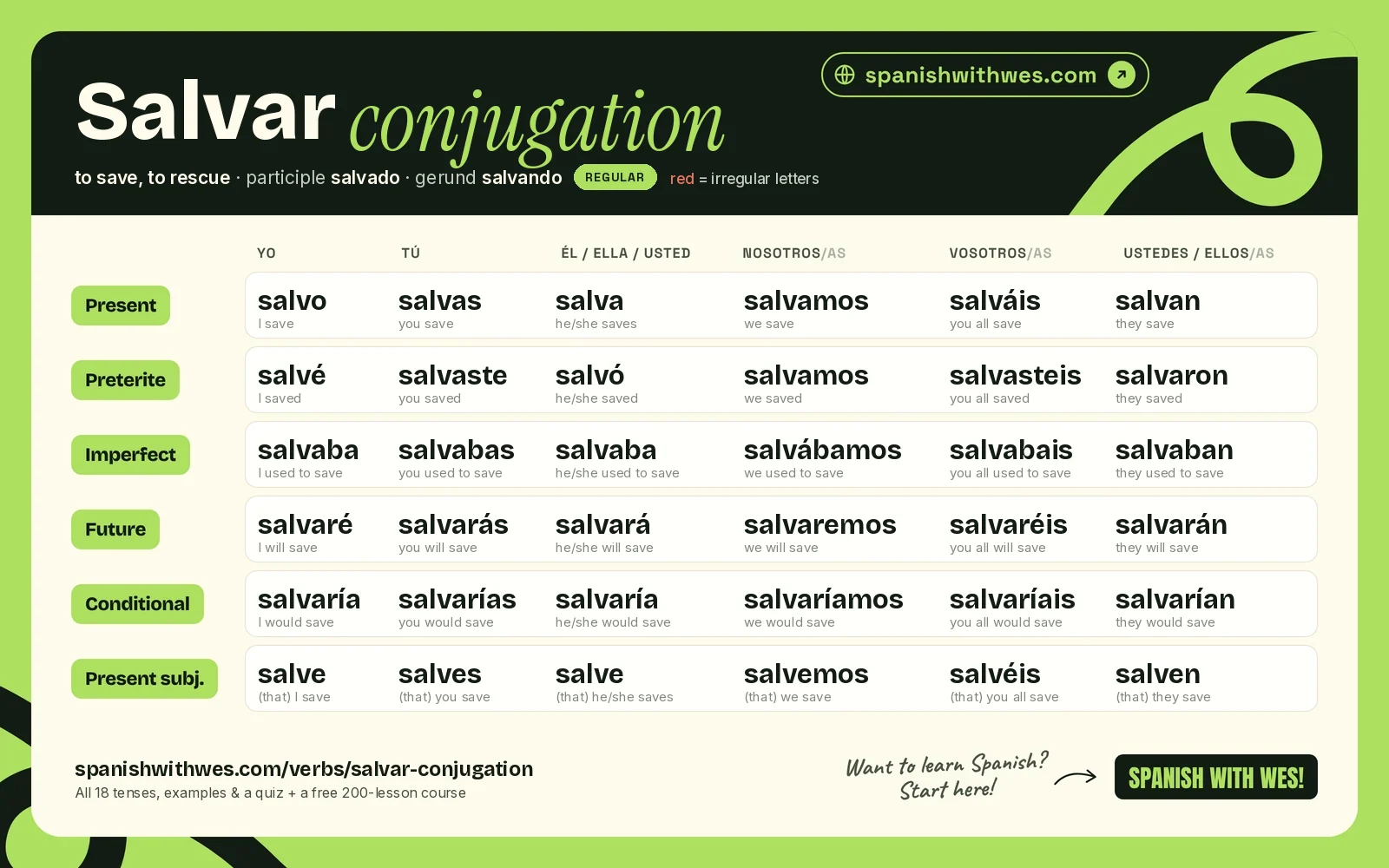
Indicative tenses of salvar
Facts and things that happen: the tenses you'll use most.
Present indicative
| yo | salvoI save |
|---|---|
| tú | salvasyou save |
| él/ella/usted | salvahe/she saves |
| nosotros/as | salvamoswe save |
| vosotros/as | salváisyou all save |
| ellos/ellas/ustedes | salvanthey save |
Preterite indicative
| yo | salvéI saved |
|---|---|
| tú | salvasteyou saved |
| él/ella/usted | salvóhe/she saved |
| nosotros/as | salvamoswe saved |
| vosotros/as | salvasteisyou all saved |
| ellos/ellas/ustedes | salvaronthey saved |
Salvamos is both "we save" and "we saved". The context tells you which one it is.
Imperfect indicative
| yo | salvabaI used to save |
|---|---|
| tú | salvabasyou used to save |
| él/ella/usted | salvabahe/she used to save |
| nosotros/as | salvábamoswe used to save |
| vosotros/as | salvabaisyou all used to save |
| ellos/ellas/ustedes | salvabanthey used to save |
Present continuous indicative
| yo | estoy salvandoI am saving |
|---|---|
| tú | estás salvandoyou are saving |
| él/ella/usted | está salvandohe/she is saving |
| nosotros/as | estamos salvandowe are saving |
| vosotros/as | estáis salvandoyou all are saving |
| ellos/ellas/ustedes | están salvandothey are saving |
estar + gerund
Informal future indicative
| yo | voy a salvarI am going to save |
|---|---|
| tú | vas a salvaryou are going to save |
| él/ella/usted | va a salvarhe/she is going to save |
| nosotros/as | vamos a salvarwe are going to save |
| vosotros/as | vais a salvaryou all are going to save |
| ellos/ellas/ustedes | van a salvarthey are going to save |
ir a + infinitive
Future indicative
| yo | salvaréI will save |
|---|---|
| tú | salvarásyou will save |
| él/ella/usted | salvaráhe/she will save |
| nosotros/as | salvaremoswe will save |
| vosotros/as | salvaréisyou all will save |
| ellos/ellas/ustedes | salvaránthey will save |
Conditional indicative
| yo | salvaríaI would save |
|---|---|
| tú | salvaríasyou would save |
| él/ella/usted | salvaríahe/she would save |
| nosotros/as | salvaríamoswe would save |
| vosotros/as | salvaríaisyou all would save |
| ellos/ellas/ustedes | salvaríanthey would save |
Present perfect indicative
| yo | he salvadoI have saved |
|---|---|
| tú | has salvadoyou have saved |
| él/ella/usted | ha salvadohe/she has saved |
| nosotros/as | hemos salvadowe have saved |
| vosotros/as | habéis salvadoyou all have saved |
| ellos/ellas/ustedes | han salvadothey have saved |
haber (present) + past participle
Past perfect indicative
| yo | había salvadoI had saved |
|---|---|
| tú | habías salvadoyou had saved |
| él/ella/usted | había salvadohe/she had saved |
| nosotros/as | habíamos salvadowe had saved |
| vosotros/as | habíais salvadoyou all had saved |
| ellos/ellas/ustedes | habían salvadothey had saved |
haber (imperfect) + past participle
Future perfect indicative
| yo | habré salvadoI will have saved |
|---|---|
| tú | habrás salvadoyou will have saved |
| él/ella/usted | habrá salvadohe/she will have saved |
| nosotros/as | habremos salvadowe will have saved |
| vosotros/as | habréis salvadoyou all will have saved |
| ellos/ellas/ustedes | habrán salvadothey will have saved |
haber (future) + past participle
Conditional perfect indicative
| yo | habría salvadoI would have saved |
|---|---|
| tú | habrías salvadoyou would have saved |
| él/ella/usted | habría salvadohe/she would have saved |
| nosotros/as | habríamos salvadowe would have saved |
| vosotros/as | habríais salvadoyou all would have saved |
| ellos/ellas/ustedes | habrían salvadothey would have saved |
haber (conditional) + past participle
Subjunctive tenses of salvar
Wishes, doubts, emotions and "if" sentences.
Present subjunctive
| yo | salve(that) I save |
|---|---|
| tú | salves(that) you save |
| él/ella/usted | salve(that) he/she saves |
| nosotros/as | salvemos(that) we save |
| vosotros/as | salvéis(that) you all save |
| ellos/ellas/ustedes | salven(that) they save |
Imperfect subjunctive
| yo | salvara / salvase(if) I saved |
|---|---|
| tú | salvaras / salvases(if) you saved |
| él/ella/usted | salvara / salvase(if) he/she saved |
| nosotros/as | salváramos / salvásemos(if) we saved |
| vosotros/as | salvarais / salvaseis(if) you all saved |
| ellos/ellas/ustedes | salvaran / salvasen(if) they saved |
Future subjunctive
| yo | salvare(if) I save |
|---|---|
| tú | salvares(if) you save |
| él/ella/usted | salvare(if) he/she saves |
| nosotros/as | salváremos(if) we save |
| vosotros/as | salvareis(if) you all save |
| ellos/ellas/ustedes | salvaren(if) they save |
rarely used: legal & formal texts
Present perfect subjunctive
| yo | haya salvado(that) I have saved |
|---|---|
| tú | hayas salvado(that) you have saved |
| él/ella/usted | haya salvado(that) he/she has saved |
| nosotros/as | hayamos salvado(that) we have saved |
| vosotros/as | hayáis salvado(that) you all have saved |
| ellos/ellas/ustedes | hayan salvado(that) they have saved |
haber (present subj.) + past participle
Past perfect subjunctive
| yo | hubiera salvado(if) I had saved |
|---|---|
| tú | hubieras salvado(if) you had saved |
| él/ella/usted | hubiera salvado(if) he/she had saved |
| nosotros/as | hubiéramos salvado(if) we had saved |
| vosotros/as | hubierais salvado(if) you all had saved |
| ellos/ellas/ustedes | hubieran salvado(if) they had saved |
haber (imperfect subj.) + past participle
Future perfect subjunctive
| yo | hubiere salvado(if) I will have saved |
|---|---|
| tú | hubieres salvado(if) you will have saved |
| él/ella/usted | hubiere salvado(if) he/she will have saved |
| nosotros/as | hubiéremos salvado(if) we will have saved |
| vosotros/as | hubiereis salvado(if) you all will have saved |
| ellos/ellas/ustedes | hubieren salvado(if) they will have saved |
rarely used: legal & formal texts
Imperative tenses of salvar
Commands and instructions.
Affirmative imperative
| tú | salvasave! |
|---|---|
| usted | salvesave! (formal) |
| nosotros/as | salvemoslet's save! |
| vosotros/as | salvadsave! (you all) |
| ustedes | salvensave! (you all, formal) |
Negative imperative
| tú | no salvesdon't save! |
|---|---|
| usted | no salvedon't save! (formal) |
| nosotros/as | no salvemoslet's not save! |
| vosotros/as | no salvéisdon't save! (you all) |
| ustedes | no salvendon't save! (you all, formal) |
Practice salvar
Two quick exercises. No sign-up, no app: just you and salvar.
How to use salvar
Los bomberos salvaron a dos niños.
The firefighters rescued two kids.
El doctor le salvó la vida.
The doctor saved his/her life.
¡Me salvaste! No tenía cargador.
You saved me! I didn't have a charger.
Nos salvamos de la lluvia por poco.
We just barely escaped the rain.
Su gol salvó el partido.
His/Her goal saved the game.
Example sentences with salvar
- Los bomberos salvaron a toda la familia.The firefighters saved the whole family.
- Ese doctor me salvó la vida.That doctor saved my life.
- ¡Gracias, me salvas!Thanks, you're a lifesaver!
- Una buena idea puede salvar el proyecto.A good idea can save the project.
- Mi hermano siempre me salvaba cuando tenía problemas.My brother always bailed me out when I was in trouble.
- El cinturón de seguridad le salvó la vida.The seatbelt saved his/her life.
- ¿Crees que van a salvar el árbol del parque?Do you think they're going to save the tree in the park?
- Han salvado a cientos de animales.They have saved hundreds of animals.
Verbs like salvar
Salvar is a regular -ar verb, so it follows the same pattern as hablar, ayudar and trabajar.
Frequently asked questions about salvar
Is salvar regular or irregular?
Salvar is completely regular. It has no stem changes and no spelling changes: salvo, salvé, salvaré.
What are the present tense forms of salvar?
Yo salvo, tú salvas, él/ella/usted salva, nosotros/as salvamos, vosotros/as salváis, ellos/ellas/ustedes salvan.
What's the difference between salvar, guardar and ahorrar?
Salvar is to rescue (a person, a life, a situation). Guardar is to keep something or save a file. Ahorrar is to save money or time: ahorro dinero.
How do you say "you saved me" in Spanish?
Say ¡me salvaste! When someone helps you out of a small problem, people also say ¡me salvaste la vida!, just like "you saved my life!" in English.
Can I say "salvar un archivo"?
You'll hear it, because it comes from English "save", but the standard way is guardar: guarda el archivo (save the file).
What is the past participle of salvar?
The past participle is salvado and the gerund is salvando. You'll also hear the adjective salvo in sano y salvo (safe and sound).
Paid courses
Ready to actually speak?
Knowing the conjugations is step one. My paid courses take you from tables to real conversations: structured, step by step, with practice built in.
- Conversational courseStop freezing in real conversations
- Verb tenses courseEvery tense, finally clear

Hola, soy Wes!
Your Spanish teacher
A Dutchie who learned Spanish from scratch. I make the lessons I wish I'd had: clear, practical and free.
My story →Support Spanish with Wes!
Did this page help you?
All my lessons, verb charts and cheat sheets are free, and I want to keep it that way. If you'd like to help me make more, you can support me here. Think of it as buying me a café con leche ☕
More Spanish verbs
Verb search
Find any Spanish verb.
Type a verb, an English word or a conjugated form like fui or hubo.