¡Oye! and ¡Oiga!
The command forms of oír are everyday words for getting someone's attention: ¡Oye! (Hey! / Listen! — informal) and ¡Oiga! (Excuse me! — formal, to a waiter or a stranger). Oír = to hear (sounds reach you); escuchar = to listen (you pay attention): Te oigo, pero no te escucho.
Indicative tenses of oír
Facts and things that happen: the tenses you'll use most.
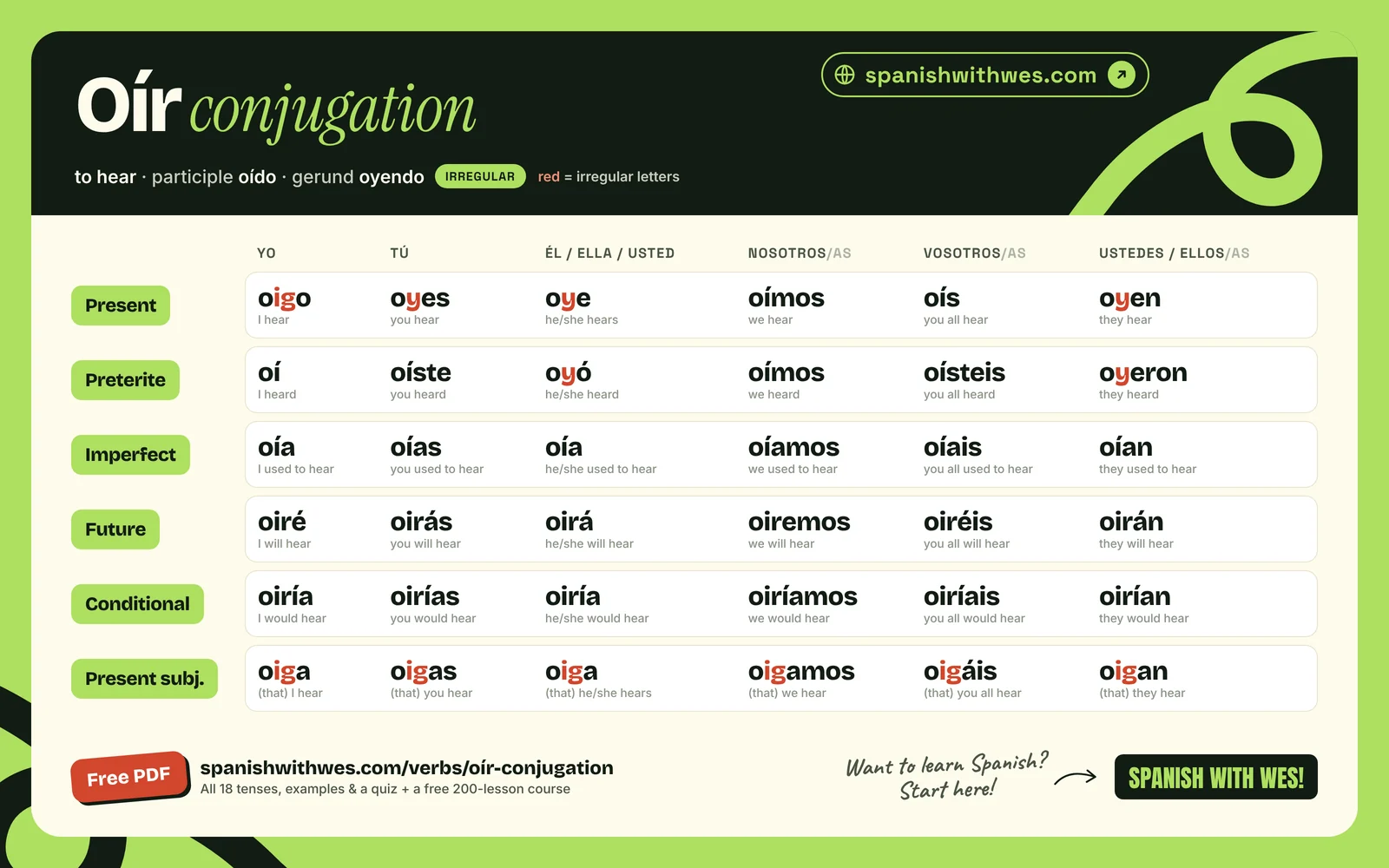
Present indicative
| yo | oigoI hear |
|---|---|
| tú | oyesyou hear |
| él/ella/usted | oyehe/she hears |
| nosotros/as | oímoswe hear |
| vosotros/as | oísyou all hear |
| ellos/ellas/ustedes | oyenthey hear |
Yo form oigo; the i becomes y in tú, él and ellos: oyes, oye, oyen.
Preterite indicative
| yo | oíI heard |
|---|---|
| tú | oísteyou heard |
| él/ella/usted | oyóhe/she heard |
| nosotros/as | oímoswe heard |
| vosotros/as | oísteisyou all heard |
| ellos/ellas/ustedes | oyeronthey heard |
The i becomes y in the third person: oyó, oyeron.
Imperfect indicative
| yo | oíaI used to hear |
|---|---|
| tú | oíasyou used to hear |
| él/ella/usted | oíahe/she used to hear |
| nosotros/as | oíamoswe used to hear |
| vosotros/as | oíaisyou all used to hear |
| ellos/ellas/ustedes | oíanthey used to hear |
Present continuous indicative
| yo | estoy oyendoI am hearing |
|---|---|
| tú | estás oyendoyou are hearing |
| él/ella/usted | está oyendohe/she is hearing |
| nosotros/as | estamos oyendowe are hearing |
| vosotros/as | estáis oyendoyou all are hearing |
| ellos/ellas/ustedes | están oyendothey are hearing |
estar + gerund
Informal future indicative
| yo | voy a oírI am going to hear |
|---|---|
| tú | vas a oíryou are going to hear |
| él/ella/usted | va a oírhe/she is going to hear |
| nosotros/as | vamos a oírwe are going to hear |
| vosotros/as | vais a oíryou all are going to hear |
| ellos/ellas/ustedes | van a oírthey are going to hear |
ir a + infinitive
Future indicative
| yo | oiréI will hear |
|---|---|
| tú | oirásyou will hear |
| él/ella/usted | oiráhe/she will hear |
| nosotros/as | oiremoswe will hear |
| vosotros/as | oiréisyou all will hear |
| ellos/ellas/ustedes | oiránthey will hear |
No accent in the future and conditional: oiré, oiría.
Conditional indicative
| yo | oiríaI would hear |
|---|---|
| tú | oiríasyou would hear |
| él/ella/usted | oiríahe/she would hear |
| nosotros/as | oiríamoswe would hear |
| vosotros/as | oiríaisyou all would hear |
| ellos/ellas/ustedes | oiríanthey would hear |
Present perfect indicative
| yo | he oídoI have heard |
|---|---|
| tú | has oídoyou have heard |
| él/ella/usted | ha oídohe/she has heard |
| nosotros/as | hemos oídowe have heard |
| vosotros/as | habéis oídoyou all have heard |
| ellos/ellas/ustedes | han oídothey have heard |
haber (present) + past participle
Past perfect indicative
| yo | había oídoI had heard |
|---|---|
| tú | habías oídoyou had heard |
| él/ella/usted | había oídohe/she had heard |
| nosotros/as | habíamos oídowe had heard |
| vosotros/as | habíais oídoyou all had heard |
| ellos/ellas/ustedes | habían oídothey had heard |
haber (imperfect) + past participle
Future perfect indicative
| yo | habré oídoI will have heard |
|---|---|
| tú | habrás oídoyou will have heard |
| él/ella/usted | habrá oídohe/she will have heard |
| nosotros/as | habremos oídowe will have heard |
| vosotros/as | habréis oídoyou all will have heard |
| ellos/ellas/ustedes | habrán oídothey will have heard |
haber (future) + past participle
Conditional perfect indicative
| yo | habría oídoI would have heard |
|---|---|
| tú | habrías oídoyou would have heard |
| él/ella/usted | habría oídohe/she would have heard |
| nosotros/as | habríamos oídowe would have heard |
| vosotros/as | habríais oídoyou all would have heard |
| ellos/ellas/ustedes | habrían oídothey would have heard |
haber (conditional) + past participle
Subjunctive tenses of oír
Wishes, doubts, emotions and "if" sentences.
Present subjunctive
| yo | oiga(that) I hear |
|---|---|
| tú | oigas(that) you hear |
| él/ella/usted | oiga(that) he/she hears |
| nosotros/as | oigamos(that) we hear |
| vosotros/as | oigáis(that) you all hear |
| ellos/ellas/ustedes | oigan(that) they hear |
Imperfect subjunctive
| yo | oyera / oyese(if) I heard |
|---|---|
| tú | oyeras / oyeses(if) you heard |
| él/ella/usted | oyera / oyese(if) he/she heard |
| nosotros/as | oyéramos / oyésemos(if) we heard |
| vosotros/as | oyerais / oyeseis(if) you all heard |
| ellos/ellas/ustedes | oyeran / oyesen(if) they heard |
Future subjunctive
| yo | oyere(if) I hear |
|---|---|
| tú | oyeres(if) you hear |
| él/ella/usted | oyere(if) he/she hears |
| nosotros/as | oyéremos(if) we hear |
| vosotros/as | oyereis(if) you all hear |
| ellos/ellas/ustedes | oyeren(if) they hear |
rarely used: legal & formal texts
Present perfect subjunctive
| yo | haya oído(that) I have heard |
|---|---|
| tú | hayas oído(that) you have heard |
| él/ella/usted | haya oído(that) he/she has heard |
| nosotros/as | hayamos oído(that) we have heard |
| vosotros/as | hayáis oído(that) you all have heard |
| ellos/ellas/ustedes | hayan oído(that) they have heard |
haber (present subj.) + past participle
Past perfect subjunctive
| yo | hubiera oído(if) I had heard |
|---|---|
| tú | hubieras oído(if) you had heard |
| él/ella/usted | hubiera oído(if) he/she had heard |
| nosotros/as | hubiéramos oído(if) we had heard |
| vosotros/as | hubierais oído(if) you all had heard |
| ellos/ellas/ustedes | hubieran oído(if) they had heard |
haber (imperfect subj.) + past participle
Future perfect subjunctive
| yo | hubiere oído(if) I will have heard |
|---|---|
| tú | hubieres oído(if) you will have heard |
| él/ella/usted | hubiere oído(if) he/she will have heard |
| nosotros/as | hubiéremos oído(if) we will have heard |
| vosotros/as | hubiereis oído(if) you all will have heard |
| ellos/ellas/ustedes | hubieren oído(if) they will have heard |
rarely used: legal & formal texts
Imperative tenses of oír
Commands and instructions.
Affirmative imperative
| tú | oyehear! |
|---|---|
| usted | oigahear! (formal) |
| nosotros/as | oigamoslet's hear! |
| vosotros/as | oídhear! (you all) |
| ustedes | oiganhear! (you all, formal) |
Negative imperative
| tú | no oigasdon't hear! |
|---|---|
| usted | no oigadon't hear! (formal) |
| nosotros/as | no oigamoslet's not hear! |
| vosotros/as | no oigáisdon't hear! (you all) |
| ustedes | no oigandon't hear! (you all, formal) |
Practice oír
Two quick exercises. No sign-up, no app: just you and oír.
How to use oír
¿Oyes ese ruido?
Do you hear that noise?
¡Oye! ¿Tienes un momento?
Hey! Have you got a minute?
No te oigo bien.
I can't hear you well.
He oído que te vas a mudar.
I've heard you're moving.
Oiga, ¿me trae la cuenta?
Excuse me, could you bring me the bill?
Example sentences with oír
- ¿Me oyes?Can you hear me?
- Oí un ruido en la cocina.I heard a noise in the kitchen.
- Nadie oyó nada.Nobody heard anything.
- De niño oía la radio con mi abuelo.As a kid I used to listen to the radio with my grandad.
- Estoy oyendo música.I'm listening to music.
- Habla bajo, que no nos oigan.Speak quietly so they don't hear us.
- Nunca he oído esa canción.I've never heard that song.
- Si oyeras su voz, te encantaría.If you heard her voice, you would love it.
Verbs like oír
Oír shares the -igo yo form with caer and traer, and the i → y change with leer and creer (leyó, creyó).
Frequently asked questions about oír
Is oír regular or irregular?
Oír is irregular: oigo in the present, and i → y between vowels (oyes, oyó, oyendo).
How do you conjugate oír in the present tense?
oigo, oyes, oye, oímos, oís, oyen.
How do you conjugate oír in the preterite?
oí, oíste, oyó, oímos, oísteis, oyeron.
What is the difference between oír and escuchar?
Oír = to hear (it just happens). Escuchar = to listen (on purpose).
What does "¡oye!" mean?
"Hey!" or "Listen!" — it's the tú command of oír. The formal version is ¡oiga!
What are the gerund and past participle of oír?
Gerund oyendo, past participle oído (with an accent).
Free cheat sheet
All 18 tenses of oír, on one page.
Print it, stick it on your fridge, or keep it on your phone. Fill in your name and email and I'll send it straight to your inbox.
📩 Check your inbox! The oír cheat sheet is on its way.
Paid courses
Ready to actually speak?
Knowing the conjugations is step one. My paid courses take you from tables to real conversations: structured, step by step, with practice built in.
- Conversational courseStop freezing in real conversations
- Verb tenses courseEvery tense, finally clear

Hola, soy Wes!
Your Spanish teacher
A Dutchie who learned Spanish from scratch. I make the lessons I wish I'd had: clear, practical and free.
My story →Support Spanish with Wes!
Did this page help you?
All my lessons, verb charts and cheat sheets are free, and I want to keep it that way. If you'd like to help me make more, you can support me here. Think of it as buying me a café con leche ☕
More Spanish verbs
Verb search
Find any Spanish verb.
Type a verb, an English word or a conjugated form like fui or hubo.