Age, hunger and "have to"
Spanish uses tener where English uses "to be": tengo 30 años (I'm 30), tengo frío (I'm cold), tengo sueño (I'm sleepy), tengo razón (I'm right). And tener que + infinitive means "to have to": tengo que trabajar.
Indicative tenses of tener
Facts and things that happen: the tenses you'll use most.
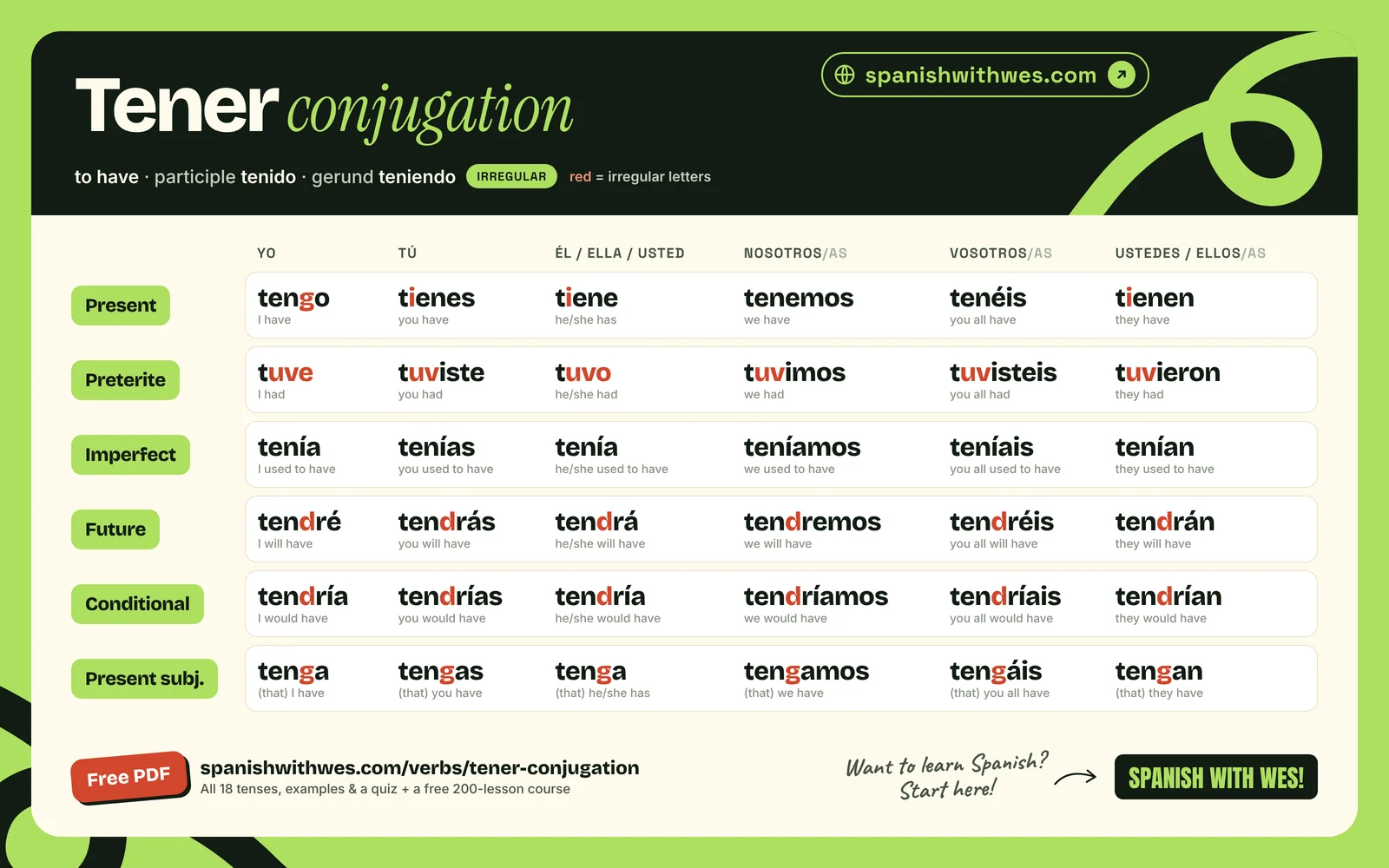
Present indicative
| yo | tengoI have |
|---|---|
| tú | tienesyou have |
| él/ella/usted | tienehe/she has |
| nosotros/as | tenemoswe have |
| vosotros/as | tenéisyou all have |
| ellos/ellas/ustedes | tienenthey have |
Stem change e → ie (tienes), plus an extra g in the yo form: tengo.
Preterite indicative
| yo | tuveI had |
|---|---|
| tú | tuvisteyou had |
| él/ella/usted | tuvohe/she had |
| nosotros/as | tuvimoswe had |
| vosotros/as | tuvisteisyou all had |
| ellos/ellas/ustedes | tuvieronthey had |
Imperfect indicative
| yo | teníaI used to have |
|---|---|
| tú | teníasyou used to have |
| él/ella/usted | teníahe/she used to have |
| nosotros/as | teníamoswe used to have |
| vosotros/as | teníaisyou all used to have |
| ellos/ellas/ustedes | teníanthey used to have |
Present continuous indicative
| yo | estoy teniendoI am having |
|---|---|
| tú | estás teniendoyou are having |
| él/ella/usted | está teniendohe/she is having |
| nosotros/as | estamos teniendowe are having |
| vosotros/as | estáis teniendoyou all are having |
| ellos/ellas/ustedes | están teniendothey are having |
estar + gerund
Informal future indicative
| yo | voy a tenerI am going to have |
|---|---|
| tú | vas a teneryou are going to have |
| él/ella/usted | va a tenerhe/she is going to have |
| nosotros/as | vamos a tenerwe are going to have |
| vosotros/as | vais a teneryou all are going to have |
| ellos/ellas/ustedes | van a tenerthey are going to have |
ir a + infinitive
Future indicative
| yo | tendréI will have |
|---|---|
| tú | tendrásyou will have |
| él/ella/usted | tendráhe/she will have |
| nosotros/as | tendremoswe will have |
| vosotros/as | tendréisyou all will have |
| ellos/ellas/ustedes | tendránthey will have |
Irregular stem tendr-, with the regular endings.
Conditional indicative
| yo | tendríaI would have |
|---|---|
| tú | tendríasyou would have |
| él/ella/usted | tendríahe/she would have |
| nosotros/as | tendríamoswe would have |
| vosotros/as | tendríaisyou all would have |
| ellos/ellas/ustedes | tendríanthey would have |
Present perfect indicative
| yo | he tenidoI have had |
|---|---|
| tú | has tenidoyou have had |
| él/ella/usted | ha tenidohe/she has had |
| nosotros/as | hemos tenidowe have had |
| vosotros/as | habéis tenidoyou all have had |
| ellos/ellas/ustedes | han tenidothey have had |
haber (present) + past participle
Past perfect indicative
| yo | había tenidoI had had |
|---|---|
| tú | habías tenidoyou had had |
| él/ella/usted | había tenidohe/she had had |
| nosotros/as | habíamos tenidowe had had |
| vosotros/as | habíais tenidoyou all had had |
| ellos/ellas/ustedes | habían tenidothey had had |
haber (imperfect) + past participle
Future perfect indicative
| yo | habré tenidoI will have had |
|---|---|
| tú | habrás tenidoyou will have had |
| él/ella/usted | habrá tenidohe/she will have had |
| nosotros/as | habremos tenidowe will have had |
| vosotros/as | habréis tenidoyou all will have had |
| ellos/ellas/ustedes | habrán tenidothey will have had |
haber (future) + past participle
Conditional perfect indicative
| yo | habría tenidoI would have had |
|---|---|
| tú | habrías tenidoyou would have had |
| él/ella/usted | habría tenidohe/she would have had |
| nosotros/as | habríamos tenidowe would have had |
| vosotros/as | habríais tenidoyou all would have had |
| ellos/ellas/ustedes | habrían tenidothey would have had |
haber (conditional) + past participle
Subjunctive tenses of tener
Wishes, doubts, emotions and "if" sentences.
Present subjunctive
| yo | tenga(that) I have |
|---|---|
| tú | tengas(that) you have |
| él/ella/usted | tenga(that) he/she has |
| nosotros/as | tengamos(that) we have |
| vosotros/as | tengáis(that) you all have |
| ellos/ellas/ustedes | tengan(that) they have |
Imperfect subjunctive
| yo | tuviera / tuviese(if) I had |
|---|---|
| tú | tuvieras / tuvieses(if) you had |
| él/ella/usted | tuviera / tuviese(if) he/she had |
| nosotros/as | tuviéramos / tuviésemos(if) we had |
| vosotros/as | tuvierais / tuvieseis(if) you all had |
| ellos/ellas/ustedes | tuvieran / tuviesen(if) they had |
Future subjunctive
| yo | tuviere(if) I have |
|---|---|
| tú | tuvieres(if) you have |
| él/ella/usted | tuviere(if) he/she has |
| nosotros/as | tuviéremos(if) we have |
| vosotros/as | tuviereis(if) you all have |
| ellos/ellas/ustedes | tuvieren(if) they have |
rarely used: legal & formal texts
Present perfect subjunctive
| yo | haya tenido(that) I have had |
|---|---|
| tú | hayas tenido(that) you have had |
| él/ella/usted | haya tenido(that) he/she has had |
| nosotros/as | hayamos tenido(that) we have had |
| vosotros/as | hayáis tenido(that) you all have had |
| ellos/ellas/ustedes | hayan tenido(that) they have had |
haber (present subj.) + past participle
Past perfect subjunctive
| yo | hubiera tenido(if) I had had |
|---|---|
| tú | hubieras tenido(if) you had had |
| él/ella/usted | hubiera tenido(if) he/she had had |
| nosotros/as | hubiéramos tenido(if) we had had |
| vosotros/as | hubierais tenido(if) you all had had |
| ellos/ellas/ustedes | hubieran tenido(if) they had had |
haber (imperfect subj.) + past participle
Future perfect subjunctive
| yo | hubiere tenido(if) I will have had |
|---|---|
| tú | hubieres tenido(if) you will have had |
| él/ella/usted | hubiere tenido(if) he/she will have had |
| nosotros/as | hubiéremos tenido(if) we will have had |
| vosotros/as | hubiereis tenido(if) you all will have had |
| ellos/ellas/ustedes | hubieren tenido(if) they will have had |
rarely used: legal & formal texts
Imperative tenses of tener
Commands and instructions.
Affirmative imperative
| tú | tenhave! |
|---|---|
| usted | tengahave! (formal) |
| nosotros/as | tengamoslet's have! |
| vosotros/as | tenedhave! (you all) |
| ustedes | tenganhave! (you all, formal) |
Negative imperative
| tú | no tengasdon't have! |
|---|---|
| usted | no tengadon't have! (formal) |
| nosotros/as | no tengamoslet's not have! |
| vosotros/as | no tengáisdon't have! (you all) |
| ustedes | no tengandon't have! (you all, formal) |
Practice tener
Two quick exercises. No sign-up, no app: just you and tener.
How to use tener
Tengo un perro y dos gatos.
I have a dog and two cats.
Mi hermana tiene veinte años.
My sister is twenty years old.
Tenemos mucha hambre.
We're very hungry.
Tienes que probar esto.
You have to try this.
Ella tiene los ojos azules.
She has blue eyes.
Example sentences with tener
- ¿Cuántos años tienes?How old are you?
- Tengo que irme.I have to go.
- Ayer tuve un día muy largo.Yesterday I had a very long day.
- De pequeño tenía un perro.As a kid I had a dog.
- Mañana tendremos más tiempo.Tomorrow we'll have more time.
- ¿Tendrías un momento?Would you have a moment?
- Ojalá tengas suerte.I hope you have luck.
- Si tuviera dinero, viajaría más.If I had money, I would travel more.
Verbs like tener
Verbs ending in -tener (mantener, obtener, contener) are conjugated exactly like tener. Venir and poner also get the extra g: vengo, pongo.
Frequently asked questions about tener
Is tener regular or irregular?
Tener is very irregular: an extra g in tengo, a stem change in tienes, an irregular preterite (tuve) and an irregular future (tendré). Only the imperfect (tenía) and the gerund and participle (teniendo, tenido) are regular.
What is the difference between tener and haber?
Tener is "to have" as in owning (tengo un coche). Haber is only a helper verb for the perfect tenses (he comido) or means "there is" (hay).
How do you conjugate tener in the present tense?
tengo, tienes, tiene, tenemos, tenéis, tienen.
How do you conjugate tener in the preterite?
tuve, tuviste, tuvo, tuvimos, tuvisteis, tuvieron.
What does "tener que" mean?
Tener que + infinitive means "to have to": tengo que estudiar (I have to study), tuvimos que esperar (we had to wait).
What is the past participle of tener?
The past participle is tenido (he tenido, I have had) and the gerund is teniendo.
Free cheat sheet
All 18 tenses of tener, on one page.
Print it, stick it on your fridge, or keep it on your phone. Fill in your name and email and I'll send it straight to your inbox.
📩 Check your inbox! The tener cheat sheet is on its way.
Paid courses
Ready to actually speak?
Knowing the conjugations is step one. My paid courses take you from tables to real conversations: structured, step by step, with practice built in.
- Conversational courseStop freezing in real conversations
- Verb tenses courseEvery tense, finally clear

Hola, soy Wes!
Your Spanish teacher
A Dutchie who learned Spanish from scratch. I make the lessons I wish I'd had: clear, practical and free.
My story →Support Spanish with Wes!
Did this page help you?
All my lessons, verb charts and cheat sheets are free, and I want to keep it that way. If you'd like to help me make more, you can support me here. Think of it as buying me a café con leche ☕
More Spanish verbs
Verb search
Find any Spanish verb.
Type a verb, an English word or a conjugated form like fui or hubo.