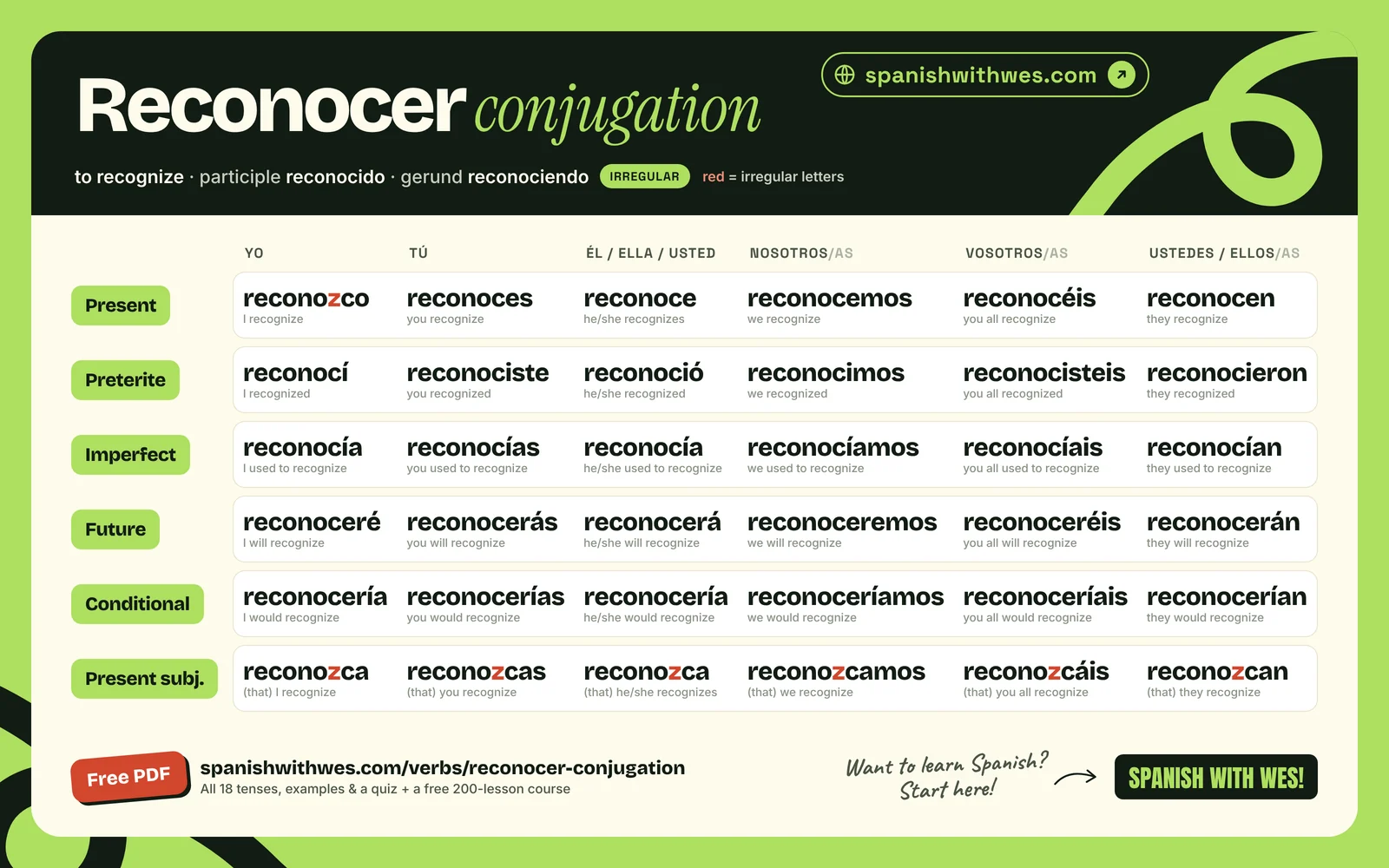
Recognize or admit
Reconocer covers both: No te reconocí (I didn't recognize you) and Reconozco que me equivoqué (I admit I was wrong). The second one is great for sounding natural when apologising. Related: el reconocimiento (recognition).
Indicative tenses of reconocer
Facts and things that happen: the tenses you'll use most.
Present indicative
| yo | reconozcoI recognize |
|---|---|
| tú | reconocesyou recognize |
| él/ella/usted | reconocehe/she recognizes |
| nosotros/as | reconocemoswe recognize |
| vosotros/as | reconocéisyou all recognize |
| ellos/ellas/ustedes | reconocenthey recognize |
Only the yo form is irregular: c → zc (reconozco).
Preterite indicative
| yo | reconocíI recognized |
|---|---|
| tú | reconocisteyou recognized |
| él/ella/usted | reconocióhe/she recognized |
| nosotros/as | reconocimoswe recognized |
| vosotros/as | reconocisteisyou all recognized |
| ellos/ellas/ustedes | reconocieronthey recognized |
Imperfect indicative
| yo | reconocíaI used to recognize |
|---|---|
| tú | reconocíasyou used to recognize |
| él/ella/usted | reconocíahe/she used to recognize |
| nosotros/as | reconocíamoswe used to recognize |
| vosotros/as | reconocíaisyou all used to recognize |
| ellos/ellas/ustedes | reconocíanthey used to recognize |
Present continuous indicative
| yo | estoy reconociendoI am recognizing |
|---|---|
| tú | estás reconociendoyou are recognizing |
| él/ella/usted | está reconociendohe/she is recognizing |
| nosotros/as | estamos reconociendowe are recognizing |
| vosotros/as | estáis reconociendoyou all are recognizing |
| ellos/ellas/ustedes | están reconociendothey are recognizing |
estar + gerund
Informal future indicative
| yo | voy a reconocerI am going to recognize |
|---|---|
| tú | vas a reconoceryou are going to recognize |
| él/ella/usted | va a reconocerhe/she is going to recognize |
| nosotros/as | vamos a reconocerwe are going to recognize |
| vosotros/as | vais a reconoceryou all are going to recognize |
| ellos/ellas/ustedes | van a reconocerthey are going to recognize |
ir a + infinitive
Future indicative
| yo | reconoceréI will recognize |
|---|---|
| tú | reconocerásyou will recognize |
| él/ella/usted | reconoceráhe/she will recognize |
| nosotros/as | reconoceremoswe will recognize |
| vosotros/as | reconoceréisyou all will recognize |
| ellos/ellas/ustedes | reconoceránthey will recognize |
Conditional indicative
| yo | reconoceríaI would recognize |
|---|---|
| tú | reconoceríasyou would recognize |
| él/ella/usted | reconoceríahe/she would recognize |
| nosotros/as | reconoceríamoswe would recognize |
| vosotros/as | reconoceríaisyou all would recognize |
| ellos/ellas/ustedes | reconoceríanthey would recognize |
Present perfect indicative
| yo | he reconocidoI have recognized |
|---|---|
| tú | has reconocidoyou have recognized |
| él/ella/usted | ha reconocidohe/she has recognized |
| nosotros/as | hemos reconocidowe have recognized |
| vosotros/as | habéis reconocidoyou all have recognized |
| ellos/ellas/ustedes | han reconocidothey have recognized |
haber (present) + past participle
Past perfect indicative
| yo | había reconocidoI had recognized |
|---|---|
| tú | habías reconocidoyou had recognized |
| él/ella/usted | había reconocidohe/she had recognized |
| nosotros/as | habíamos reconocidowe had recognized |
| vosotros/as | habíais reconocidoyou all had recognized |
| ellos/ellas/ustedes | habían reconocidothey had recognized |
haber (imperfect) + past participle
Future perfect indicative
| yo | habré reconocidoI will have recognized |
|---|---|
| tú | habrás reconocidoyou will have recognized |
| él/ella/usted | habrá reconocidohe/she will have recognized |
| nosotros/as | habremos reconocidowe will have recognized |
| vosotros/as | habréis reconocidoyou all will have recognized |
| ellos/ellas/ustedes | habrán reconocidothey will have recognized |
haber (future) + past participle
Conditional perfect indicative
| yo | habría reconocidoI would have recognized |
|---|---|
| tú | habrías reconocidoyou would have recognized |
| él/ella/usted | habría reconocidohe/she would have recognized |
| nosotros/as | habríamos reconocidowe would have recognized |
| vosotros/as | habríais reconocidoyou all would have recognized |
| ellos/ellas/ustedes | habrían reconocidothey would have recognized |
haber (conditional) + past participle
Subjunctive tenses of reconocer
Wishes, doubts, emotions and "if" sentences.
Present subjunctive
| yo | reconozca(that) I recognize |
|---|---|
| tú | reconozcas(that) you recognize |
| él/ella/usted | reconozca(that) he/she recognizes |
| nosotros/as | reconozcamos(that) we recognize |
| vosotros/as | reconozcáis(that) you all recognize |
| ellos/ellas/ustedes | reconozcan(that) they recognize |
The zc carries over into the whole present subjunctive: reconozca.
Imperfect subjunctive
| yo | reconociera(if) I recognized |
|---|---|
| tú | reconocieras(if) you recognized |
| él/ella/usted | reconociera(if) he/she recognized |
| nosotros/as | reconociéramos(if) we recognized |
| vosotros/as | reconocierais(if) you all recognized |
| ellos/ellas/ustedes | reconocieran(if) they recognized |
Future subjunctive
| yo | reconociere(if) I recognize |
|---|---|
| tú | reconocieres(if) you recognize |
| él/ella/usted | reconociere(if) he/she recognizes |
| nosotros/as | reconociéremos(if) we recognize |
| vosotros/as | reconociereis(if) you all recognize |
| ellos/ellas/ustedes | reconocieren(if) they recognize |
rarely used: legal & formal texts
Present perfect subjunctive
| yo | haya reconocido(that) I have recognized |
|---|---|
| tú | hayas reconocido(that) you have recognized |
| él/ella/usted | haya reconocido(that) he/she has recognized |
| nosotros/as | hayamos reconocido(that) we have recognized |
| vosotros/as | hayáis reconocido(that) you all have recognized |
| ellos/ellas/ustedes | hayan reconocido(that) they have recognized |
haber (present subj.) + past participle
Past perfect subjunctive
| yo | hubiera reconocido(if) I had recognized |
|---|---|
| tú | hubieras reconocido(if) you had recognized |
| él/ella/usted | hubiera reconocido(if) he/she had recognized |
| nosotros/as | hubiéramos reconocido(if) we had recognized |
| vosotros/as | hubierais reconocido(if) you all had recognized |
| ellos/ellas/ustedes | hubieran reconocido(if) they had recognized |
haber (imperfect subj.) + past participle
Future perfect subjunctive
| yo | hubiere reconocido(if) I will have recognized |
|---|---|
| tú | hubieres reconocido(if) you will have recognized |
| él/ella/usted | hubiere reconocido(if) he/she will have recognized |
| nosotros/as | hubiéremos reconocido(if) we will have recognized |
| vosotros/as | hubiereis reconocido(if) you all will have recognized |
| ellos/ellas/ustedes | hubieren reconocido(if) they will have recognized |
rarely used: legal & formal texts
Imperative tenses of reconocer
Commands and instructions.
Affirmative imperative
| tú | reconocerecognize! |
|---|---|
| usted | reconozcarecognize! (formal) |
| nosotros/as | reconozcamoslet's recognize! |
| vosotros/as | reconocedrecognize! (you all) |
| ustedes | reconozcanrecognize! (you all, formal) |
Negative imperative
| tú | no reconozcasdon't recognize! |
|---|---|
| usted | no reconozcadon't recognize! (formal) |
| nosotros/as | no reconozcamoslet's not recognize! |
| vosotros/as | no reconozcáisdon't recognize! (you all) |
| ustedes | no reconozcandon't recognize! (you all, formal) |
Practice reconocer
Two quick exercises. No sign-up, no app: just you and reconocer.
How to use reconocer
¡No te reconocí con barba!
I didn't recognize you with a beard!
Reconozco que tenías razón.
I admit you were right.
Nadie reconoce su esfuerzo.
Nobody acknowledges her effort.
¿Reconoces esta canción?
Do you recognize this song?
El título está reconocido en Europa.
The degree is recognized in Europe.
Example sentences with reconocer
- Lo reconocí por la voz.I recognized him by his voice.
- Ella reconoció su error.She admitted her mistake.
- Antes reconocía a todos los vecinos.I used to recognize all the neighbours.
- No me reconocerás.You won't recognize me.
- Reconoce que te gusta.Admit that you like it.
- Es importante que reconozcas tus errores.It's important that you admit your mistakes.
- Los fans la reconocieron en la calle.The fans recognized her in the street.
- Ha reconocido que no sabe.He's admitted he doesn't know.
Verbs like reconocer
Reconocer is conocer with re- in front, and conjugates the same way. All these -cer verbs get -zco in the yo form: parecer, nacer, ofrecer.
Frequently asked questions about reconocer
Is reconocer regular or irregular?
Reconocer is irregular only in the present yo form (reconozco) and the present subjunctive (reconozca).
How do you conjugate reconocer in the present tense?
reconozco, reconoces, reconoce, reconocemos, reconocéis, reconocen.
How do you conjugate reconocer in the preterite?
reconocí, reconociste, reconoció, reconocimos, reconocisteis, reconocieron.
Does reconocer mean recognize or admit?
Both! No te reconocí = I didn't recognize you; reconozco que… = I admit that…
Is reconocer conjugated like conocer?
Yes, exactly the same pattern.
What is the past participle of reconocer?
The past participle is reconocido and the gerund is reconociendo.
Free cheat sheet
All 18 tenses of reconocer, on one page.
Print it, stick it on your fridge, or keep it on your phone. Fill in your name and email and I'll send it straight to your inbox.
📩 Check your inbox! The reconocer cheat sheet is on its way.
Paid courses
Ready to actually speak?
Knowing the conjugations is step one. My paid courses take you from tables to real conversations: structured, step by step, with practice built in.
- Conversational courseStop freezing in real conversations
- Verb tenses courseEvery tense, finally clear

Hola, soy Wes!
Your Spanish teacher
A Dutchie who learned Spanish from scratch. I make the lessons I wish I'd had: clear, practical and free.
My story →Support Spanish with Wes!
Did this page help you?
All my lessons, verb charts and cheat sheets are free, and I want to keep it that way. If you'd like to help me make more, you can support me here. Think of it as buying me a café con leche ☕
More Spanish verbs
Verb search
Find any Spanish verb.
Type a verb, an English word or a conjugated form like fui or hubo.