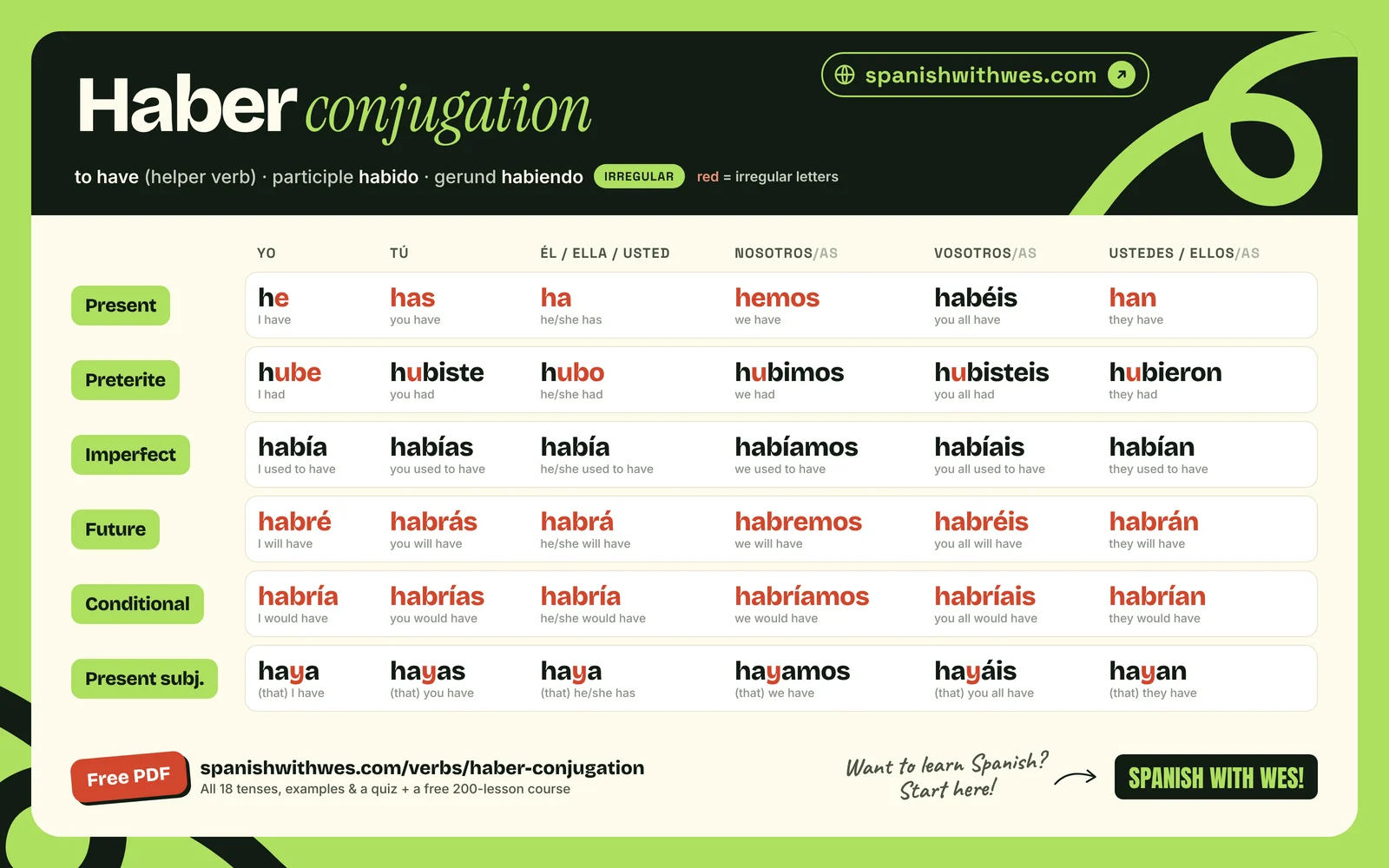
Haber or tener?
Both translate as "to have", but they're never interchangeable. Tener is for owning things (tengo un perro). Haber is only a helper: it always needs a past participle after it (he visto), or it becomes hay. If you can replace "have" with "own", you need tener.
Indicative tenses of haber
Facts and things that happen: the tenses you'll use most.
Present indicative
| yo | heI have |
|---|---|
| tú | hasyou have |
| él/ella/usted | hahe/she has |
| nosotros/as | hemoswe have |
| vosotros/as | habéisyou all have |
| ellos/ellas/ustedes | hanthey have |
For "there is / there are", use the special form hay.
Preterite indicative
| yo | hubeI had |
|---|---|
| tú | hubisteyou had |
| él/ella/usted | hubohe/she had |
| nosotros/as | hubimoswe had |
| vosotros/as | hubisteisyou all had |
| ellos/ellas/ustedes | hubieronthey had |
Imperfect indicative
| yo | habíaI used to have |
|---|---|
| tú | habíasyou used to have |
| él/ella/usted | habíahe/she used to have |
| nosotros/as | habíamoswe used to have |
| vosotros/as | habíaisyou all used to have |
| ellos/ellas/ustedes | habíanthey used to have |
Present continuous indicative
| yo | estoy habiendoI am having |
|---|---|
| tú | estás habiendoyou are having |
| él/ella/usted | está habiendohe/she is having |
| nosotros/as | estamos habiendowe are having |
| vosotros/as | estáis habiendoyou all are having |
| ellos/ellas/ustedes | están habiendothey are having |
estar + gerund
Practically never used with haber.
Informal future indicative
| yo | voy a haberI am going to have |
|---|---|
| tú | vas a haberyou are going to have |
| él/ella/usted | va a haberhe/she is going to have |
| nosotros/as | vamos a haberwe are going to have |
| vosotros/as | vais a haberyou all are going to have |
| ellos/ellas/ustedes | van a haberthey are going to have |
ir a + infinitive
Future indicative
| yo | habréI will have |
|---|---|
| tú | habrásyou will have |
| él/ella/usted | habráhe/she will have |
| nosotros/as | habremoswe will have |
| vosotros/as | habréisyou all will have |
| ellos/ellas/ustedes | habránthey will have |
Conditional indicative
| yo | habríaI would have |
|---|---|
| tú | habríasyou would have |
| él/ella/usted | habríahe/she would have |
| nosotros/as | habríamoswe would have |
| vosotros/as | habríaisyou all would have |
| ellos/ellas/ustedes | habríanthey would have |
Present perfect indicative
| yo | he habidoI have had |
|---|---|
| tú | has habidoyou have had |
| él/ella/usted | ha habidohe/she has had |
| nosotros/as | hemos habidowe have had |
| vosotros/as | habéis habidoyou all have had |
| ellos/ellas/ustedes | han habidothey have had |
haber (present) + past participle
Past perfect indicative
| yo | había habidoI had had |
|---|---|
| tú | habías habidoyou had had |
| él/ella/usted | había habidohe/she had had |
| nosotros/as | habíamos habidowe had had |
| vosotros/as | habíais habidoyou all had had |
| ellos/ellas/ustedes | habían habidothey had had |
haber (imperfect) + past participle
Future perfect indicative
| yo | habré habidoI will have had |
|---|---|
| tú | habrás habidoyou will have had |
| él/ella/usted | habrá habidohe/she will have had |
| nosotros/as | habremos habidowe will have had |
| vosotros/as | habréis habidoyou all will have had |
| ellos/ellas/ustedes | habrán habidothey will have had |
haber (future) + past participle
Conditional perfect indicative
| yo | habría habidoI would have had |
|---|---|
| tú | habrías habidoyou would have had |
| él/ella/usted | habría habidohe/she would have had |
| nosotros/as | habríamos habidowe would have had |
| vosotros/as | habríais habidoyou all would have had |
| ellos/ellas/ustedes | habrían habidothey would have had |
haber (conditional) + past participle
Subjunctive tenses of haber
Wishes, doubts, emotions and "if" sentences.
Present subjunctive
| yo | haya(that) I have |
|---|---|
| tú | hayas(that) you have |
| él/ella/usted | haya(that) he/she has |
| nosotros/as | hayamos(that) we have |
| vosotros/as | hayáis(that) you all have |
| ellos/ellas/ustedes | hayan(that) they have |
Imperfect subjunctive
| yo | hubiera / hubiese(if) I had |
|---|---|
| tú | hubieras / hubieses(if) you had |
| él/ella/usted | hubiera / hubiese(if) he/she had |
| nosotros/as | hubiéramos / hubiésemos(if) we had |
| vosotros/as | hubierais / hubieseis(if) you all had |
| ellos/ellas/ustedes | hubieran / hubiesen(if) they had |
Future subjunctive
| yo | hubiere(if) I have |
|---|---|
| tú | hubieres(if) you have |
| él/ella/usted | hubiere(if) he/she has |
| nosotros/as | hubiéremos(if) we have |
| vosotros/as | hubiereis(if) you all have |
| ellos/ellas/ustedes | hubieren(if) they have |
rarely used: legal & formal texts
Present perfect subjunctive
| yo | haya habido(that) I have had |
|---|---|
| tú | hayas habido(that) you have had |
| él/ella/usted | haya habido(that) he/she has had |
| nosotros/as | hayamos habido(that) we have had |
| vosotros/as | hayáis habido(that) you all have had |
| ellos/ellas/ustedes | hayan habido(that) they have had |
haber (present subj.) + past participle
Past perfect subjunctive
| yo | hubiera habido(if) I had had |
|---|---|
| tú | hubieras habido(if) you had had |
| él/ella/usted | hubiera habido(if) he/she had had |
| nosotros/as | hubiéramos habido(if) we had had |
| vosotros/as | hubierais habido(if) you all had had |
| ellos/ellas/ustedes | hubieran habido(if) they had had |
haber (imperfect subj.) + past participle
Future perfect subjunctive
| yo | hubiere habido(if) I will have had |
|---|---|
| tú | hubieres habido(if) you will have had |
| él/ella/usted | hubiere habido(if) he/she will have had |
| nosotros/as | hubiéremos habido(if) we will have had |
| vosotros/as | hubiereis habido(if) you all will have had |
| ellos/ellas/ustedes | hubieren habido(if) they will have had |
rarely used: legal & formal texts
Imperative tenses of haber
Commands and instructions.
Affirmative imperative
| tú | hehave! |
|---|---|
| usted | hayahave! (formal) |
| nosotros/as | hayamoslet's have! |
| vosotros/as | habedhave! (you all) |
| ustedes | hayanhave! (you all, formal) |
Practically never used: haber has no real command form.
Negative imperative
| tú | no hayasdon't have! |
|---|---|
| usted | no hayadon't have! (formal) |
| nosotros/as | no hayamoslet's not have! |
| vosotros/as | no hayáisdon't have! (you all) |
| ustedes | no hayandon't have! (you all, formal) |
Practically never used.
Practice haber
Two quick exercises. No sign-up, no app: just you and haber.
How to use haber
He estado en Madrid.
I have been to Madrid.
Hay un problema.
There is a problem.
Hay que estudiar todos los días.
You have to study every day.
Había mucha gente en la fiesta.
There were a lot of people at the party.
Example sentences with haber
- ¿Has comido ya?Have you eaten yet?
- Nunca he estado en México.I've never been to Mexico.
- Hay dos cafés en la mesa.There are two coffees on the table.
- Cuando llegué, ya se habían ido.When I arrived, they had already left.
- Habrá mucho tráfico mañana.There will be a lot of traffic tomorrow.
- Si hubiera sabido, te habría llamado.If I had known, I would have called you.
- Espero que hayas dormido bien.I hope you slept well.
- Hubo un accidente en la autopista.There was an accident on the highway.
Verbs like haber
Like haber (hube), these verbs have a u in their preterite stem.
Frequently asked questions about haber
Is haber regular or irregular?
Haber is irregular. Almost every simple tense has irregular forms, like he, hubo, habré and haya. Only the imperfect (había) and the gerund and participle (habiendo, habido) are regular.
What is the difference between "ha" and "hay"?
Ha is the helper verb (ha comido, he has eaten). Hay means "there is / there are" (hay un gato). They both come from haber.
How do you conjugate haber in the present tense?
he, has, ha, hemos, habéis, han. And for "there is / there are": hay.
How do you conjugate haber in the preterite?
hube, hubiste, hubo, hubimos, hubisteis, hubieron. In everyday Spanish you'll mostly hear hubo ("there was").
Is it "hubieron" or "hubo" for "there were"?
Use hubo, even for plurals: hubo muchos problemas. The impersonal haber is always singular, so hubieron problemas is a common mistake.
What is the past participle of haber?
The past participle is habido and the gerund is habiendo.
Free cheat sheet
All 18 tenses of haber, on one page.
Print it, stick it on your fridge, or keep it on your phone. Fill in your name and email and I'll send it straight to your inbox.
📩 Check your inbox! The haber cheat sheet is on its way.
Paid courses
Ready to actually speak?
Knowing the conjugations is step one. My paid courses take you from tables to real conversations: structured, step by step, with practice built in.
- Conversational courseStop freezing in real conversations
- Verb tenses courseEvery tense, finally clear

Hola, soy Wes!
Your Spanish teacher
A Dutchie who learned Spanish from scratch. I make the lessons I wish I'd had: clear, practical and free.
My story →Support Spanish with Wes!
Did this page help you?
All my lessons, verb charts and cheat sheets are free, and I want to keep it that way. If you'd like to help me make more, you can support me here. Think of it as buying me a café con leche ☕
More Spanish verbs
Verb search
Find any Spanish verb.
Type a verb, an English word or a conjugated form like fui or hubo.