Lograr + infinitive
English "manage to" is lograr + infinitive: No logro dormir (I can't manage to sleep), ¡Lo logramos! (We did it!). With a different subject, use lograr que + subjunctive: Logré que mi hijo comiera verduras (I got my son to eat vegetables).
Indicative tenses of lograr
Facts and things that happen: the tenses you'll use most.
Present indicative
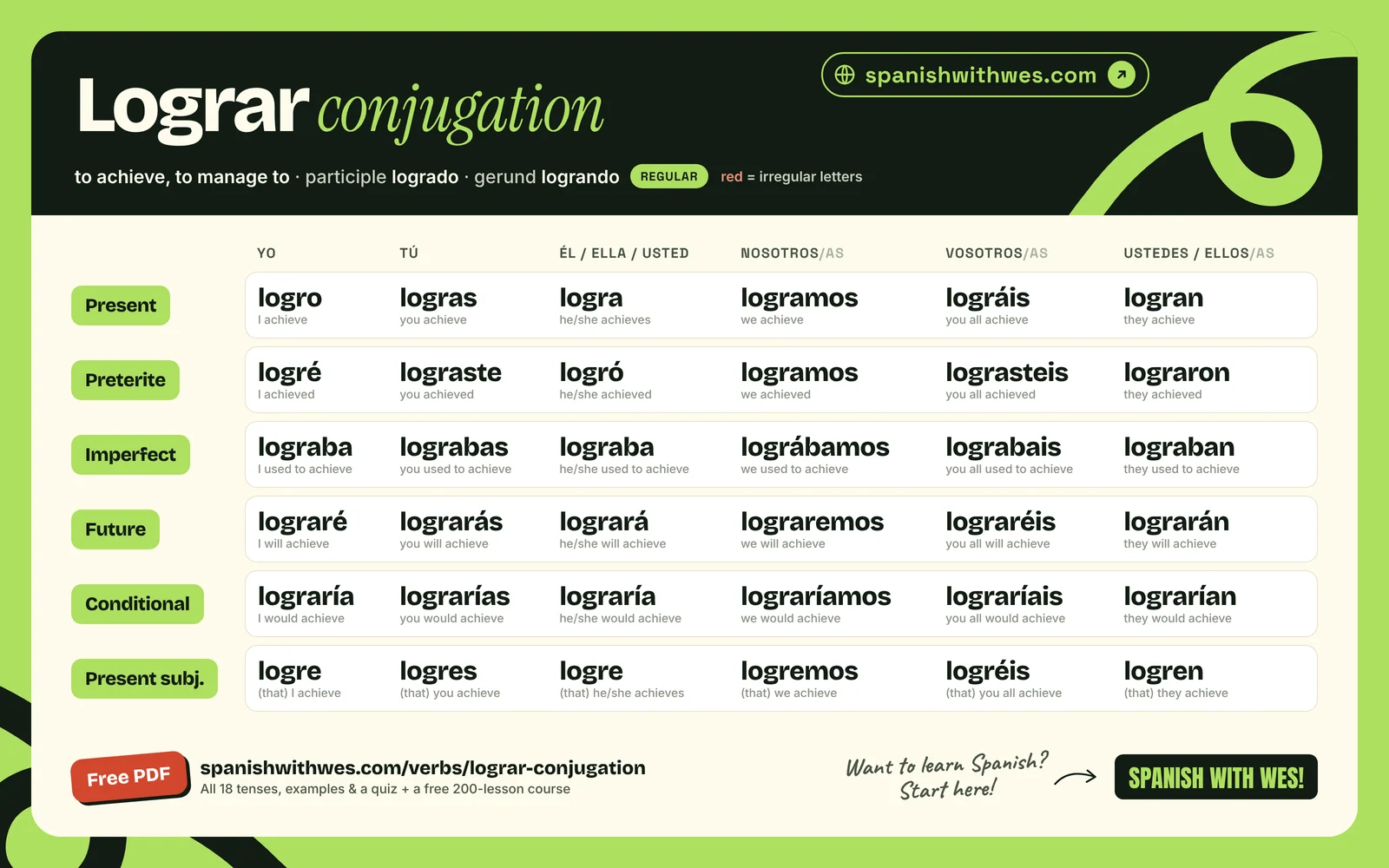
| yo | logroI achieve |
|---|---|
| tú | lograsyou achieve |
| él/ella/usted | lograhe/she achieves |
| nosotros/as | logramoswe achieve |
| vosotros/as | lográisyou all achieve |
| ellos/ellas/ustedes | logranthey achieve |
Fully regular. Lograr + infinitive = to manage to do something.
Preterite indicative
| yo | logréI achieved |
|---|---|
| tú | lograsteyou achieved |
| él/ella/usted | logróhe/she achieved |
| nosotros/as | logramoswe achieved |
| vosotros/as | lograsteisyou all achieved |
| ellos/ellas/ustedes | lograronthey achieved |
Imperfect indicative
| yo | lograbaI used to achieve |
|---|---|
| tú | lograbasyou used to achieve |
| él/ella/usted | lograbahe/she used to achieve |
| nosotros/as | lográbamoswe used to achieve |
| vosotros/as | lograbaisyou all used to achieve |
| ellos/ellas/ustedes | lograbanthey used to achieve |
Present continuous indicative
| yo | estoy lograndoI am achieving |
|---|---|
| tú | estás lograndoyou are achieving |
| él/ella/usted | está lograndohe/she is achieving |
| nosotros/as | estamos lograndowe are achieving |
| vosotros/as | estáis lograndoyou all are achieving |
| ellos/ellas/ustedes | están lograndothey are achieving |
estar + gerund
Informal future indicative
| yo | voy a lograrI am going to achieve |
|---|---|
| tú | vas a lograryou are going to achieve |
| él/ella/usted | va a lograrhe/she is going to achieve |
| nosotros/as | vamos a lograrwe are going to achieve |
| vosotros/as | vais a lograryou all are going to achieve |
| ellos/ellas/ustedes | van a lograrthey are going to achieve |
ir a + infinitive
Future indicative
| yo | lograréI will achieve |
|---|---|
| tú | lograrásyou will achieve |
| él/ella/usted | lograráhe/she will achieve |
| nosotros/as | lograremoswe will achieve |
| vosotros/as | lograréisyou all will achieve |
| ellos/ellas/ustedes | lograránthey will achieve |
Conditional indicative
| yo | lograríaI would achieve |
|---|---|
| tú | lograríasyou would achieve |
| él/ella/usted | lograríahe/she would achieve |
| nosotros/as | lograríamoswe would achieve |
| vosotros/as | lograríaisyou all would achieve |
| ellos/ellas/ustedes | lograríanthey would achieve |
Present perfect indicative
| yo | he logradoI have achieved |
|---|---|
| tú | has logradoyou have achieved |
| él/ella/usted | ha logradohe/she has achieved |
| nosotros/as | hemos logradowe have achieved |
| vosotros/as | habéis logradoyou all have achieved |
| ellos/ellas/ustedes | han logradothey have achieved |
haber (present) + past participle
Past perfect indicative
| yo | había logradoI had achieved |
|---|---|
| tú | habías logradoyou had achieved |
| él/ella/usted | había logradohe/she had achieved |
| nosotros/as | habíamos logradowe had achieved |
| vosotros/as | habíais logradoyou all had achieved |
| ellos/ellas/ustedes | habían logradothey had achieved |
haber (imperfect) + past participle
Future perfect indicative
| yo | habré logradoI will have achieved |
|---|---|
| tú | habrás logradoyou will have achieved |
| él/ella/usted | habrá logradohe/she will have achieved |
| nosotros/as | habremos logradowe will have achieved |
| vosotros/as | habréis logradoyou all will have achieved |
| ellos/ellas/ustedes | habrán logradothey will have achieved |
haber (future) + past participle
Conditional perfect indicative
| yo | habría logradoI would have achieved |
|---|---|
| tú | habrías logradoyou would have achieved |
| él/ella/usted | habría logradohe/she would have achieved |
| nosotros/as | habríamos logradowe would have achieved |
| vosotros/as | habríais logradoyou all would have achieved |
| ellos/ellas/ustedes | habrían logradothey would have achieved |
haber (conditional) + past participle
Subjunctive tenses of lograr
Wishes, doubts, emotions and "if" sentences.
Present subjunctive
| yo | logre(that) I achieve |
|---|---|
| tú | logres(that) you achieve |
| él/ella/usted | logre(that) he/she achieves |
| nosotros/as | logremos(that) we achieve |
| vosotros/as | logréis(that) you all achieve |
| ellos/ellas/ustedes | logren(that) they achieve |
Imperfect subjunctive
| yo | lograra(if) I achieved |
|---|---|
| tú | lograras(if) you achieved |
| él/ella/usted | lograra(if) he/she achieved |
| nosotros/as | lográramos(if) we achieved |
| vosotros/as | lograrais(if) you all achieved |
| ellos/ellas/ustedes | lograran(if) they achieved |
Future subjunctive
| yo | lograre(if) I achieve |
|---|---|
| tú | lograres(if) you achieve |
| él/ella/usted | lograre(if) he/she achieves |
| nosotros/as | lográremos(if) we achieve |
| vosotros/as | lograreis(if) you all achieve |
| ellos/ellas/ustedes | lograren(if) they achieve |
rarely used: legal & formal texts
Present perfect subjunctive
| yo | haya logrado(that) I have achieved |
|---|---|
| tú | hayas logrado(that) you have achieved |
| él/ella/usted | haya logrado(that) he/she has achieved |
| nosotros/as | hayamos logrado(that) we have achieved |
| vosotros/as | hayáis logrado(that) you all have achieved |
| ellos/ellas/ustedes | hayan logrado(that) they have achieved |
haber (present subj.) + past participle
Past perfect subjunctive
| yo | hubiera logrado(if) I had achieved |
|---|---|
| tú | hubieras logrado(if) you had achieved |
| él/ella/usted | hubiera logrado(if) he/she had achieved |
| nosotros/as | hubiéramos logrado(if) we had achieved |
| vosotros/as | hubierais logrado(if) you all had achieved |
| ellos/ellas/ustedes | hubieran logrado(if) they had achieved |
haber (imperfect subj.) + past participle
Future perfect subjunctive
| yo | hubiere logrado(if) I will have achieved |
|---|---|
| tú | hubieres logrado(if) you will have achieved |
| él/ella/usted | hubiere logrado(if) he/she will have achieved |
| nosotros/as | hubiéremos logrado(if) we will have achieved |
| vosotros/as | hubiereis logrado(if) you all will have achieved |
| ellos/ellas/ustedes | hubieren logrado(if) they will have achieved |
rarely used: legal & formal texts
Imperative tenses of lograr
Commands and instructions.
Affirmative imperative
| tú | lograachieve! |
|---|---|
| usted | logreachieve! (formal) |
| nosotros/as | logremoslet's achieve! |
| vosotros/as | logradachieve! (you all) |
| ustedes | logrenachieve! (you all, formal) |
Negative imperative
| tú | no logresdon't achieve! |
|---|---|
| usted | no logredon't achieve! (formal) |
| nosotros/as | no logremoslet's not achieve! |
| vosotros/as | no logréisdon't achieve! (you all) |
| ustedes | no logrendon't achieve! (you all, formal) |
Practice lograr
Two quick exercises. No sign-up, no app: just you and lograr.
How to use lograr
Logré terminar el proyecto a tiempo.
I managed to finish the project on time.
Quiero lograr mis objetivos.
I want to achieve my goals.
¡Lo logramos!
We did it!
No logro entender esto.
I can't manage to understand this.
Logró que todos se rieran.
She got everyone to laugh.
Example sentences with lograr
- ¿Lograste hablar con él?Did you manage to talk to him?
- Por fin logró su sueño.He finally achieved his dream.
- No lograba concentrarme.I couldn't manage to concentrate.
- Lograremos nuestro objetivo.We'll achieve our goal.
- Si estudias, lo lograrás.If you study, you'll make it.
- Espero que lo logres.I hope you manage it.
- Hemos logrado mucho este año.We've achieved a lot this year.
- Con más tiempo, lo lograría.With more time, I would manage it.
Verbs like lograr
Lograr is a regular -ar verb. It means almost the same as conseguir, which is irregular (consigo, consiguió).
Frequently asked questions about lograr
Is lograr regular or irregular?
Lograr is completely regular in every tense.
How do you conjugate lograr in the present tense?
logro, logras, logra, logramos, lográis, logran.
How do you conjugate lograr in the preterite?
logré, lograste, logró, logramos, lograsteis, lograron.
What is the difference between lograr and conseguir?
They mean the same ("to achieve / manage to"). Conseguir is a bit more common in speech and is irregular.
How do you say "we did it!"?
¡Lo logramos! or ¡Lo conseguimos!
What is the past participle of lograr?
The past participle is logrado and the gerund is logrando.
Free cheat sheet
All 18 tenses of lograr, on one page.
Print it, stick it on your fridge, or keep it on your phone. Fill in your name and email and I'll send it straight to your inbox.
📩 Check your inbox! The lograr cheat sheet is on its way.
Paid courses
Ready to actually speak?
Knowing the conjugations is step one. My paid courses take you from tables to real conversations: structured, step by step, with practice built in.
- Conversational courseStop freezing in real conversations
- Verb tenses courseEvery tense, finally clear

Hola, soy Wes!
Your Spanish teacher
A Dutchie who learned Spanish from scratch. I make the lessons I wish I'd had: clear, practical and free.
My story →Support Spanish with Wes!
Did this page help you?
All my lessons, verb charts and cheat sheets are free, and I want to keep it that way. If you'd like to help me make more, you can support me here. Think of it as buying me a café con leche ☕
More Spanish verbs
Verb search
Find any Spanish verb.
Type a verb, an English word or a conjugated form like fui or hubo.