Llevar for "how long"
A super natural way to talk about time: llevar + time + gerund. Llevo dos años viviendo aquí (I've been living here for two years). ¿Cuánto tiempo llevas estudiando español? (How long have you been learning Spanish?)
Indicative tenses of llevar
Facts and things that happen: the tenses you'll use most.
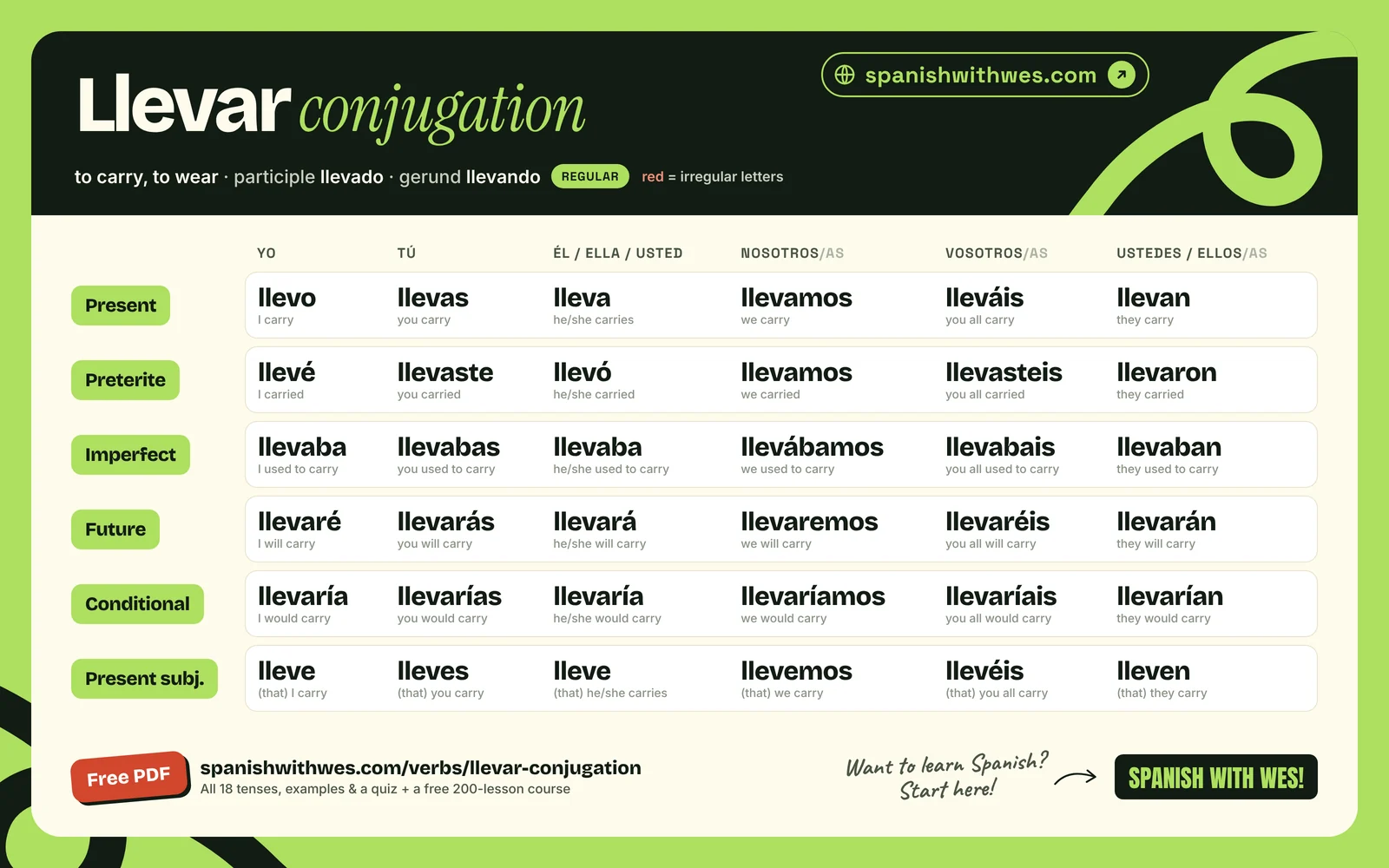
Present indicative
| yo | llevoI carry |
|---|---|
| tú | llevasyou carry |
| él/ella/usted | llevahe/she carries |
| nosotros/as | llevamoswe carry |
| vosotros/as | lleváisyou all carry |
| ellos/ellas/ustedes | llevanthey carry |
Llevo dos años aquí = I've been here for two years.
Preterite indicative
| yo | llevéI carried |
|---|---|
| tú | llevasteyou carried |
| él/ella/usted | llevóhe/she carried |
| nosotros/as | llevamoswe carried |
| vosotros/as | llevasteisyou all carried |
| ellos/ellas/ustedes | llevaronthey carried |
Imperfect indicative
| yo | llevabaI used to carry |
|---|---|
| tú | llevabasyou used to carry |
| él/ella/usted | llevabahe/she used to carry |
| nosotros/as | llevábamoswe used to carry |
| vosotros/as | llevabaisyou all used to carry |
| ellos/ellas/ustedes | llevabanthey used to carry |
Present continuous indicative
| yo | estoy llevandoI am carrying |
|---|---|
| tú | estás llevandoyou are carrying |
| él/ella/usted | está llevandohe/she is carrying |
| nosotros/as | estamos llevandowe are carrying |
| vosotros/as | estáis llevandoyou all are carrying |
| ellos/ellas/ustedes | están llevandothey are carrying |
estar + gerund
Informal future indicative
| yo | voy a llevarI am going to carry |
|---|---|
| tú | vas a llevaryou are going to carry |
| él/ella/usted | va a llevarhe/she is going to carry |
| nosotros/as | vamos a llevarwe are going to carry |
| vosotros/as | vais a llevaryou all are going to carry |
| ellos/ellas/ustedes | van a llevarthey are going to carry |
ir a + infinitive
Future indicative
| yo | llevaréI will carry |
|---|---|
| tú | llevarásyou will carry |
| él/ella/usted | llevaráhe/she will carry |
| nosotros/as | llevaremoswe will carry |
| vosotros/as | llevaréisyou all will carry |
| ellos/ellas/ustedes | llevaránthey will carry |
Conditional indicative
| yo | llevaríaI would carry |
|---|---|
| tú | llevaríasyou would carry |
| él/ella/usted | llevaríahe/she would carry |
| nosotros/as | llevaríamoswe would carry |
| vosotros/as | llevaríaisyou all would carry |
| ellos/ellas/ustedes | llevaríanthey would carry |
Present perfect indicative
| yo | he llevadoI have carried |
|---|---|
| tú | has llevadoyou have carried |
| él/ella/usted | ha llevadohe/she has carried |
| nosotros/as | hemos llevadowe have carried |
| vosotros/as | habéis llevadoyou all have carried |
| ellos/ellas/ustedes | han llevadothey have carried |
haber (present) + past participle
Past perfect indicative
| yo | había llevadoI had carried |
|---|---|
| tú | habías llevadoyou had carried |
| él/ella/usted | había llevadohe/she had carried |
| nosotros/as | habíamos llevadowe had carried |
| vosotros/as | habíais llevadoyou all had carried |
| ellos/ellas/ustedes | habían llevadothey had carried |
haber (imperfect) + past participle
Future perfect indicative
| yo | habré llevadoI will have carried |
|---|---|
| tú | habrás llevadoyou will have carried |
| él/ella/usted | habrá llevadohe/she will have carried |
| nosotros/as | habremos llevadowe will have carried |
| vosotros/as | habréis llevadoyou all will have carried |
| ellos/ellas/ustedes | habrán llevadothey will have carried |
haber (future) + past participle
Conditional perfect indicative
| yo | habría llevadoI would have carried |
|---|---|
| tú | habrías llevadoyou would have carried |
| él/ella/usted | habría llevadohe/she would have carried |
| nosotros/as | habríamos llevadowe would have carried |
| vosotros/as | habríais llevadoyou all would have carried |
| ellos/ellas/ustedes | habrían llevadothey would have carried |
haber (conditional) + past participle
Subjunctive tenses of llevar
Wishes, doubts, emotions and "if" sentences.
Present subjunctive
| yo | lleve(that) I carry |
|---|---|
| tú | lleves(that) you carry |
| él/ella/usted | lleve(that) he/she carries |
| nosotros/as | llevemos(that) we carry |
| vosotros/as | llevéis(that) you all carry |
| ellos/ellas/ustedes | lleven(that) they carry |
Imperfect subjunctive
| yo | llevara(if) I carried |
|---|---|
| tú | llevaras(if) you carried |
| él/ella/usted | llevara(if) he/she carried |
| nosotros/as | lleváramos(if) we carried |
| vosotros/as | llevarais(if) you all carried |
| ellos/ellas/ustedes | llevaran(if) they carried |
Future subjunctive
| yo | llevare(if) I carry |
|---|---|
| tú | llevares(if) you carry |
| él/ella/usted | llevare(if) he/she carries |
| nosotros/as | lleváremos(if) we carry |
| vosotros/as | llevareis(if) you all carry |
| ellos/ellas/ustedes | llevaren(if) they carry |
rarely used: legal & formal texts
Present perfect subjunctive
| yo | haya llevado(that) I have carried |
|---|---|
| tú | hayas llevado(that) you have carried |
| él/ella/usted | haya llevado(that) he/she has carried |
| nosotros/as | hayamos llevado(that) we have carried |
| vosotros/as | hayáis llevado(that) you all have carried |
| ellos/ellas/ustedes | hayan llevado(that) they have carried |
haber (present subj.) + past participle
Past perfect subjunctive
| yo | hubiera llevado(if) I had carried |
|---|---|
| tú | hubieras llevado(if) you had carried |
| él/ella/usted | hubiera llevado(if) he/she had carried |
| nosotros/as | hubiéramos llevado(if) we had carried |
| vosotros/as | hubierais llevado(if) you all had carried |
| ellos/ellas/ustedes | hubieran llevado(if) they had carried |
haber (imperfect subj.) + past participle
Future perfect subjunctive
| yo | hubiere llevado(if) I will have carried |
|---|---|
| tú | hubieres llevado(if) you will have carried |
| él/ella/usted | hubiere llevado(if) he/she will have carried |
| nosotros/as | hubiéremos llevado(if) we will have carried |
| vosotros/as | hubiereis llevado(if) you all will have carried |
| ellos/ellas/ustedes | hubieren llevado(if) they will have carried |
rarely used: legal & formal texts
Imperative tenses of llevar
Commands and instructions.
Affirmative imperative
| tú | llevacarry! |
|---|---|
| usted | llevecarry! (formal) |
| nosotros/as | llevemoslet's carry! |
| vosotros/as | llevadcarry! (you all) |
| ustedes | llevencarry! (you all, formal) |
Negative imperative
| tú | no llevesdon't carry! |
|---|---|
| usted | no llevedon't carry! (formal) |
| nosotros/as | no llevemoslet's not carry! |
| vosotros/as | no llevéisdon't carry! (you all) |
| ustedes | no llevendon't carry! (you all, formal) |
Practice llevar
Two quick exercises. No sign-up, no app: just you and llevar.
How to use llevar
¿Te llevo la maleta?
Shall I carry your suitcase?
Te llevo a casa.
I'll take you home.
Lleva una camisa azul.
He's wearing a blue shirt.
Llevo un año estudiando español.
I've been learning Spanish for a year.
Me llevo bien con mi hermano.
I get along well with my brother.
Example sentences with llevar
- ¿Qué llevas en la mochila?What's in your backpack?
- Llevo tres meses aquí.I've been here for three months.
- Me llevé un susto.I got a fright.
- Siempre llevaba gafas.He always used to wear glasses.
- Te llevaré al aeropuerto.I'll take you to the airport.
- ¿Me llevarías a la estación?Would you take me to the station?
- Lleva paraguas, que va a llover.Take an umbrella, it's going to rain.
- ¿Para llevar o para tomar aquí?To take away or to have here?
Verbs like llevar
Llevar follows the same regular -ar pattern as hablar, dejar, tomar. Its opposite, traer (to bring), is irregular: traigo, traje.
Frequently asked questions about llevar
Is llevar regular or irregular?
Llevar is completely regular. It follows the normal -ar pattern in every tense.
How do you conjugate llevar in the present tense?
llevo, llevas, lleva, llevamos, lleváis, llevan.
What is the difference between llevar and traer?
Llevar = to take something away from where you are. Traer = to bring something to where you are. Lleva esto a la cocina vs. trae eso aquí.
How do you say "I've been… for" with llevar?
Llevar + time + gerund: llevo un año viviendo en Madrid (I've been living in Madrid for a year).
What does "llevarse bien" mean?
"To get along well": me llevo muy bien con mis compañeros.
What is the past participle of llevar?
The past participle is llevado and the gerund is llevando.
Free cheat sheet
All 18 tenses of llevar, on one page.
Print it, stick it on your fridge, or keep it on your phone. Fill in your name and email and I'll send it straight to your inbox.
📩 Check your inbox! The llevar cheat sheet is on its way.
Paid courses
Ready to actually speak?
Knowing the conjugations is step one. My paid courses take you from tables to real conversations: structured, step by step, with practice built in.
- Conversational courseStop freezing in real conversations
- Verb tenses courseEvery tense, finally clear

Hola, soy Wes!
Your Spanish teacher
A Dutchie who learned Spanish from scratch. I make the lessons I wish I'd had: clear, practical and free.
My story →Support Spanish with Wes!
Did this page help you?
All my lessons, verb charts and cheat sheets are free, and I want to keep it that way. If you'd like to help me make more, you can support me here. Think of it as buying me a café con leche ☕
More Spanish verbs
Verb search
Find any Spanish verb.
Type a verb, an English word or a conjugated form like fui or hubo.