¿Me lo explicas?
You explain something a someone, so explicar usually comes with an indirect object pronoun: ¿Me explicas esto? (Can you explain this to me?), Te lo explico (I'll explain it to you). Great classroom phrase: ¿Puedes explicarlo otra vez? (Can you explain it again?).
Indicative tenses of explicar
Facts and things that happen: the tenses you'll use most.
Present indicative
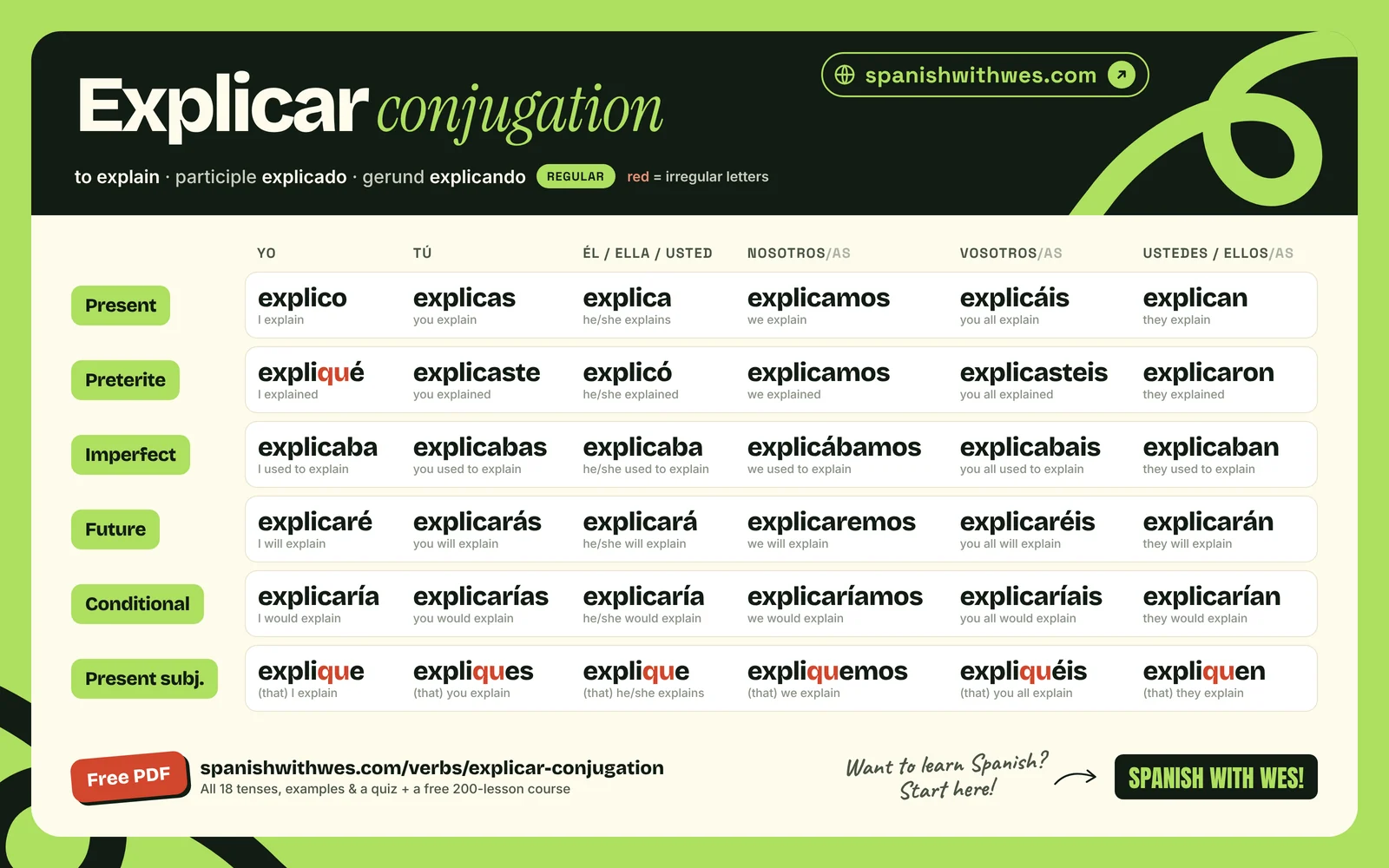
| yo | explicoI explain |
|---|---|
| tú | explicasyou explain |
| él/ella/usted | explicahe/she explains |
| nosotros/as | explicamoswe explain |
| vosotros/as | explicáisyou all explain |
| ellos/ellas/ustedes | explicanthey explain |
Preterite indicative
| yo | expliquéI explained |
|---|---|
| tú | explicasteyou explained |
| él/ella/usted | explicóhe/she explained |
| nosotros/as | explicamoswe explained |
| vosotros/as | explicasteisyou all explained |
| ellos/ellas/ustedes | explicaronthey explained |
Spelling change in the yo form: c → qu before e — expliqué.
Imperfect indicative
| yo | explicabaI used to explain |
|---|---|
| tú | explicabasyou used to explain |
| él/ella/usted | explicabahe/she used to explain |
| nosotros/as | explicábamoswe used to explain |
| vosotros/as | explicabaisyou all used to explain |
| ellos/ellas/ustedes | explicabanthey used to explain |
Present continuous indicative
| yo | estoy explicandoI am explaining |
|---|---|
| tú | estás explicandoyou are explaining |
| él/ella/usted | está explicandohe/she is explaining |
| nosotros/as | estamos explicandowe are explaining |
| vosotros/as | estáis explicandoyou all are explaining |
| ellos/ellas/ustedes | están explicandothey are explaining |
estar + gerund
Informal future indicative
| yo | voy a explicarI am going to explain |
|---|---|
| tú | vas a explicaryou are going to explain |
| él/ella/usted | va a explicarhe/she is going to explain |
| nosotros/as | vamos a explicarwe are going to explain |
| vosotros/as | vais a explicaryou all are going to explain |
| ellos/ellas/ustedes | van a explicarthey are going to explain |
ir a + infinitive
Future indicative
| yo | explicaréI will explain |
|---|---|
| tú | explicarásyou will explain |
| él/ella/usted | explicaráhe/she will explain |
| nosotros/as | explicaremoswe will explain |
| vosotros/as | explicaréisyou all will explain |
| ellos/ellas/ustedes | explicaránthey will explain |
Conditional indicative
| yo | explicaríaI would explain |
|---|---|
| tú | explicaríasyou would explain |
| él/ella/usted | explicaríahe/she would explain |
| nosotros/as | explicaríamoswe would explain |
| vosotros/as | explicaríaisyou all would explain |
| ellos/ellas/ustedes | explicaríanthey would explain |
Present perfect indicative
| yo | he explicadoI have explained |
|---|---|
| tú | has explicadoyou have explained |
| él/ella/usted | ha explicadohe/she has explained |
| nosotros/as | hemos explicadowe have explained |
| vosotros/as | habéis explicadoyou all have explained |
| ellos/ellas/ustedes | han explicadothey have explained |
haber (present) + past participle
Past perfect indicative
| yo | había explicadoI had explained |
|---|---|
| tú | habías explicadoyou had explained |
| él/ella/usted | había explicadohe/she had explained |
| nosotros/as | habíamos explicadowe had explained |
| vosotros/as | habíais explicadoyou all had explained |
| ellos/ellas/ustedes | habían explicadothey had explained |
haber (imperfect) + past participle
Future perfect indicative
| yo | habré explicadoI will have explained |
|---|---|
| tú | habrás explicadoyou will have explained |
| él/ella/usted | habrá explicadohe/she will have explained |
| nosotros/as | habremos explicadowe will have explained |
| vosotros/as | habréis explicadoyou all will have explained |
| ellos/ellas/ustedes | habrán explicadothey will have explained |
haber (future) + past participle
Conditional perfect indicative
| yo | habría explicadoI would have explained |
|---|---|
| tú | habrías explicadoyou would have explained |
| él/ella/usted | habría explicadohe/she would have explained |
| nosotros/as | habríamos explicadowe would have explained |
| vosotros/as | habríais explicadoyou all would have explained |
| ellos/ellas/ustedes | habrían explicadothey would have explained |
haber (conditional) + past participle
Subjunctive tenses of explicar
Wishes, doubts, emotions and "if" sentences.
Present subjunctive
| yo | explique(that) I explain |
|---|---|
| tú | expliques(that) you explain |
| él/ella/usted | explique(that) he/she explains |
| nosotros/as | expliquemos(that) we explain |
| vosotros/as | expliquéis(that) you all explain |
| ellos/ellas/ustedes | expliquen(that) they explain |
Spelling change c → qu in every form: explique, expliquemos.
Imperfect subjunctive
| yo | explicara(if) I explained |
|---|---|
| tú | explicaras(if) you explained |
| él/ella/usted | explicara(if) he/she explained |
| nosotros/as | explicáramos(if) we explained |
| vosotros/as | explicarais(if) you all explained |
| ellos/ellas/ustedes | explicaran(if) they explained |
Future subjunctive
| yo | explicare(if) I explain |
|---|---|
| tú | explicares(if) you explain |
| él/ella/usted | explicare(if) he/she explains |
| nosotros/as | explicáremos(if) we explain |
| vosotros/as | explicareis(if) you all explain |
| ellos/ellas/ustedes | explicaren(if) they explain |
rarely used: legal & formal texts
Present perfect subjunctive
| yo | haya explicado(that) I have explained |
|---|---|
| tú | hayas explicado(that) you have explained |
| él/ella/usted | haya explicado(that) he/she has explained |
| nosotros/as | hayamos explicado(that) we have explained |
| vosotros/as | hayáis explicado(that) you all have explained |
| ellos/ellas/ustedes | hayan explicado(that) they have explained |
haber (present subj.) + past participle
Past perfect subjunctive
| yo | hubiera explicado(if) I had explained |
|---|---|
| tú | hubieras explicado(if) you had explained |
| él/ella/usted | hubiera explicado(if) he/she had explained |
| nosotros/as | hubiéramos explicado(if) we had explained |
| vosotros/as | hubierais explicado(if) you all had explained |
| ellos/ellas/ustedes | hubieran explicado(if) they had explained |
haber (imperfect subj.) + past participle
Future perfect subjunctive
| yo | hubiere explicado(if) I will have explained |
|---|---|
| tú | hubieres explicado(if) you will have explained |
| él/ella/usted | hubiere explicado(if) he/she will have explained |
| nosotros/as | hubiéremos explicado(if) we will have explained |
| vosotros/as | hubiereis explicado(if) you all will have explained |
| ellos/ellas/ustedes | hubieren explicado(if) they will have explained |
rarely used: legal & formal texts
Imperative tenses of explicar
Commands and instructions.
Affirmative imperative
| tú | explicaexplain! |
|---|---|
| usted | expliqueexplain! (formal) |
| nosotros/as | expliquemoslet's explain! |
| vosotros/as | explicadexplain! (you all) |
| ustedes | expliquenexplain! (you all, formal) |
Negative imperative
| tú | no expliquesdon't explain! |
|---|---|
| usted | no expliquedon't explain! (formal) |
| nosotros/as | no expliquemoslet's not explain! |
| vosotros/as | no expliquéisdon't explain! (you all) |
| ustedes | no expliquendon't explain! (you all, formal) |
Practice explicar
Two quick exercises. No sign-up, no app: just you and explicar.
How to use explicar
El profesor explica la gramática.
The teacher explains the grammar.
¿Me lo puedes explicar otra vez?
Can you explain it to me again?
Eso explica muchas cosas.
That explains a lot.
Déjame explicarme.
Let me explain myself.
No me explico cómo pasó.
I can't understand how it happened.
Example sentences with explicar
- Te lo explico en un momento.I'll explain it to you in a moment.
- Expliqué el problema a mi jefe.I explained the problem to my boss.
- Ella lo explicó muy bien.She explained it really well.
- Mi madre me explicaba todo con paciencia.My mother used to explain everything patiently.
- Mañana os explicaré el plan.Tomorrow I'll explain the plan to you all.
- Explícame qué pasó.Explain to me what happened.
- Quiero que me lo expliques.I want you to explain it to me.
- Nadie me ha explicado nada.Nobody has explained anything to me.
Verbs like explicar
Every verb ending in -car has the same c → qu spelling change: buscar, sacar, tocar, practicar.
Frequently asked questions about explicar
Is explicar regular or irregular?
Explicar is regular, with a spelling change: c → qu before e (expliqué, explique).
How do you conjugate explicar in the present tense?
explico, explicas, explica, explicamos, explicáis, explican.
How do you conjugate explicar in the preterite?
expliqué, explicaste, explicó, explicamos, explicasteis, explicaron.
Why is it "expliqué" and not "explicé"?
In Spanish, ce sounds like "the" or "se". To keep the k sound, c changes to qu: expliqué.
How do you say "can you explain it to me?"
¿Me lo puedes explicar? or ¿Me lo explicas?
What is the past participle of explicar?
The past participle is explicado and the gerund is explicando.
Free cheat sheet
All 18 tenses of explicar, on one page.
Print it, stick it on your fridge, or keep it on your phone. Fill in your name and email and I'll send it straight to your inbox.
📩 Check your inbox! The explicar cheat sheet is on its way.
Paid courses
Ready to actually speak?
Knowing the conjugations is step one. My paid courses take you from tables to real conversations: structured, step by step, with practice built in.
- Conversational courseStop freezing in real conversations
- Verb tenses courseEvery tense, finally clear

Hola, soy Wes!
Your Spanish teacher
A Dutchie who learned Spanish from scratch. I make the lessons I wish I'd had: clear, practical and free.
My story →Support Spanish with Wes!
Did this page help you?
All my lessons, verb charts and cheat sheets are free, and I want to keep it that way. If you'd like to help me make more, you can support me here. Think of it as buying me a café con leche ☕
More Spanish verbs
Verb search
Find any Spanish verb.
Type a verb, an English word or a conjugated form like fui or hubo.