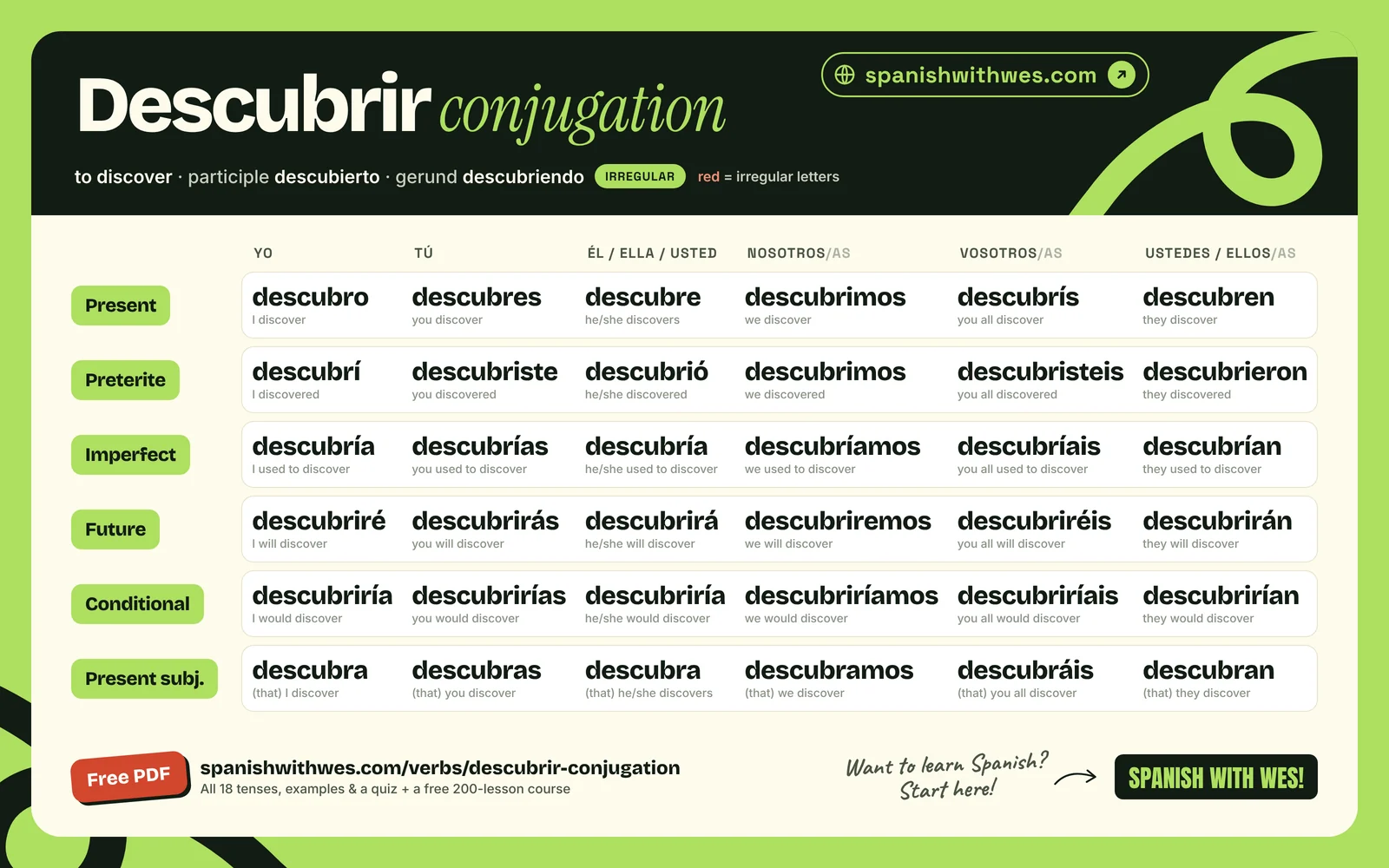
Find out = descubrir
English "find out" is often descubrir (or enterarse): Descubrí que era mentira (I found out it was a lie). It's also great for things you discover and love: Acabo de descubrir este canal. The noun is el descubrimiento (discovery).
Indicative tenses of descubrir
Facts and things that happen: the tenses you'll use most.
Present indicative
| yo | descubroI discover |
|---|---|
| tú | descubresyou discover |
| él/ella/usted | descubrehe/she discovers |
| nosotros/as | descubrimoswe discover |
| vosotros/as | descubrísyou all discover |
| ellos/ellas/ustedes | descubrenthey discover |
Preterite indicative
| yo | descubríI discovered |
|---|---|
| tú | descubristeyou discovered |
| él/ella/usted | descubrióhe/she discovered |
| nosotros/as | descubrimoswe discovered |
| vosotros/as | descubristeisyou all discovered |
| ellos/ellas/ustedes | descubrieronthey discovered |
Imperfect indicative
| yo | descubríaI used to discover |
|---|---|
| tú | descubríasyou used to discover |
| él/ella/usted | descubríahe/she used to discover |
| nosotros/as | descubríamoswe used to discover |
| vosotros/as | descubríaisyou all used to discover |
| ellos/ellas/ustedes | descubríanthey used to discover |
Present continuous indicative
| yo | estoy descubriendoI am discovering |
|---|---|
| tú | estás descubriendoyou are discovering |
| él/ella/usted | está descubriendohe/she is discovering |
| nosotros/as | estamos descubriendowe are discovering |
| vosotros/as | estáis descubriendoyou all are discovering |
| ellos/ellas/ustedes | están descubriendothey are discovering |
estar + gerund
Informal future indicative
| yo | voy a descubrirI am going to discover |
|---|---|
| tú | vas a descubriryou are going to discover |
| él/ella/usted | va a descubrirhe/she is going to discover |
| nosotros/as | vamos a descubrirwe are going to discover |
| vosotros/as | vais a descubriryou all are going to discover |
| ellos/ellas/ustedes | van a descubrirthey are going to discover |
ir a + infinitive
Future indicative
| yo | descubriréI will discover |
|---|---|
| tú | descubrirásyou will discover |
| él/ella/usted | descubriráhe/she will discover |
| nosotros/as | descubriremoswe will discover |
| vosotros/as | descubriréisyou all will discover |
| ellos/ellas/ustedes | descubriránthey will discover |
Conditional indicative
| yo | descubriríaI would discover |
|---|---|
| tú | descubriríasyou would discover |
| él/ella/usted | descubriríahe/she would discover |
| nosotros/as | descubriríamoswe would discover |
| vosotros/as | descubriríaisyou all would discover |
| ellos/ellas/ustedes | descubriríanthey would discover |
Present perfect indicative
| yo | he descubiertoI have discovered |
|---|---|
| tú | has descubiertoyou have discovered |
| él/ella/usted | ha descubiertohe/she has discovered |
| nosotros/as | hemos descubiertowe have discovered |
| vosotros/as | habéis descubiertoyou all have discovered |
| ellos/ellas/ustedes | han descubiertothey have discovered |
haber (present) + past participle
The past participle is irregular: descubierto, not descubrido.
Past perfect indicative
| yo | había descubiertoI had discovered |
|---|---|
| tú | habías descubiertoyou had discovered |
| él/ella/usted | había descubiertohe/she had discovered |
| nosotros/as | habíamos descubiertowe had discovered |
| vosotros/as | habíais descubiertoyou all had discovered |
| ellos/ellas/ustedes | habían descubiertothey had discovered |
haber (imperfect) + past participle
Future perfect indicative
| yo | habré descubiertoI will have discovered |
|---|---|
| tú | habrás descubiertoyou will have discovered |
| él/ella/usted | habrá descubiertohe/she will have discovered |
| nosotros/as | habremos descubiertowe will have discovered |
| vosotros/as | habréis descubiertoyou all will have discovered |
| ellos/ellas/ustedes | habrán descubiertothey will have discovered |
haber (future) + past participle
Conditional perfect indicative
| yo | habría descubiertoI would have discovered |
|---|---|
| tú | habrías descubiertoyou would have discovered |
| él/ella/usted | habría descubiertohe/she would have discovered |
| nosotros/as | habríamos descubiertowe would have discovered |
| vosotros/as | habríais descubiertoyou all would have discovered |
| ellos/ellas/ustedes | habrían descubiertothey would have discovered |
haber (conditional) + past participle
Subjunctive tenses of descubrir
Wishes, doubts, emotions and "if" sentences.
Present subjunctive
| yo | descubra(that) I discover |
|---|---|
| tú | descubras(that) you discover |
| él/ella/usted | descubra(that) he/she discovers |
| nosotros/as | descubramos(that) we discover |
| vosotros/as | descubráis(that) you all discover |
| ellos/ellas/ustedes | descubran(that) they discover |
Imperfect subjunctive
| yo | descubriera(if) I discovered |
|---|---|
| tú | descubrieras(if) you discovered |
| él/ella/usted | descubriera(if) he/she discovered |
| nosotros/as | descubriéramos(if) we discovered |
| vosotros/as | descubrierais(if) you all discovered |
| ellos/ellas/ustedes | descubrieran(if) they discovered |
Future subjunctive
| yo | descubriere(if) I discover |
|---|---|
| tú | descubrieres(if) you discover |
| él/ella/usted | descubriere(if) he/she discovers |
| nosotros/as | descubriéremos(if) we discover |
| vosotros/as | descubriereis(if) you all discover |
| ellos/ellas/ustedes | descubrieren(if) they discover |
rarely used: legal & formal texts
Present perfect subjunctive
| yo | haya descubierto(that) I have discovered |
|---|---|
| tú | hayas descubierto(that) you have discovered |
| él/ella/usted | haya descubierto(that) he/she has discovered |
| nosotros/as | hayamos descubierto(that) we have discovered |
| vosotros/as | hayáis descubierto(that) you all have discovered |
| ellos/ellas/ustedes | hayan descubierto(that) they have discovered |
haber (present subj.) + past participle
Past perfect subjunctive
| yo | hubiera descubierto(if) I had discovered |
|---|---|
| tú | hubieras descubierto(if) you had discovered |
| él/ella/usted | hubiera descubierto(if) he/she had discovered |
| nosotros/as | hubiéramos descubierto(if) we had discovered |
| vosotros/as | hubierais descubierto(if) you all had discovered |
| ellos/ellas/ustedes | hubieran descubierto(if) they had discovered |
haber (imperfect subj.) + past participle
Future perfect subjunctive
| yo | hubiere descubierto(if) I will have discovered |
|---|---|
| tú | hubieres descubierto(if) you will have discovered |
| él/ella/usted | hubiere descubierto(if) he/she will have discovered |
| nosotros/as | hubiéremos descubierto(if) we will have discovered |
| vosotros/as | hubiereis descubierto(if) you all will have discovered |
| ellos/ellas/ustedes | hubieren descubierto(if) they will have discovered |
rarely used: legal & formal texts
Imperative tenses of descubrir
Commands and instructions.
Affirmative imperative
| tú | descubrediscover! |
|---|---|
| usted | descubradiscover! (formal) |
| nosotros/as | descubramoslet's discover! |
| vosotros/as | descubriddiscover! (you all) |
| ustedes | descubrandiscover! (you all, formal) |
Negative imperative
| tú | no descubrasdon't discover! |
|---|---|
| usted | no descubradon't discover! (formal) |
| nosotros/as | no descubramoslet's not discover! |
| vosotros/as | no descubráisdon't discover! (you all) |
| ustedes | no descubrandon't discover! (you all, formal) |
Practice descubrir
Two quick exercises. No sign-up, no app: just you and descubrir.
How to use descubrir
Colón descubrió América en 1492.
Columbus discovered America in 1492.
Descubrí que me había mentido.
I found out he had lied to me.
Acabo de descubrir esta serie.
I've just discovered this series.
Me encanta descubrir ciudades nuevas.
I love discovering new cities.
La policía descubrió la verdad.
The police uncovered the truth.
Example sentences with descubrir
- Cada día descubro palabras nuevas.Every day I discover new words.
- ¿Cómo descubriste este canal?How did you find this channel?
- Descubrimos un restaurante increíble.We discovered an amazing restaurant.
- De niño descubría rincones secretos en el bosque.As a kid I used to discover secret spots in the woods.
- Pronto descubrirás la respuesta.You'll soon find out the answer.
- Descubre Andalucía con nosotros.Discover Andalusia with us.
- No quiero que descubra la sorpresa.I don't want her to find out about the surprise.
- Han descubierto un planeta nuevo.They've discovered a new planet.
Verbs like descubrir
Descubrir is a regular -ir verb with an irregular past participle, like abrir (abierto), cubrir (cubierto) and escribir (escrito).
Frequently asked questions about descubrir
Is descubrir regular or irregular?
Descubrir is regular in all simple tenses. Only the past participle is irregular: descubierto.
How do you conjugate descubrir in the present tense?
descubro, descubres, descubre, descubrimos, descubrís, descubren.
How do you conjugate descubrir in the preterite?
descubrí, descubriste, descubrió, descubrimos, descubristeis, descubrieron.
What is the past participle of descubrir?
Descubierto, not descubrido: he descubierto.
How do you say "to find out" in Spanish?
Descubrir or enterarse (de): me enteré ayer = I found out yesterday.
What is the gerund of descubrir?
The gerund is regular: descubriendo.
Free cheat sheet
All 18 tenses of descubrir, on one page.
Print it, stick it on your fridge, or keep it on your phone. Fill in your name and email and I'll send it straight to your inbox.
📩 Check your inbox! The descubrir cheat sheet is on its way.
Paid courses
Ready to actually speak?
Knowing the conjugations is step one. My paid courses take you from tables to real conversations: structured, step by step, with practice built in.
- Conversational courseStop freezing in real conversations
- Verb tenses courseEvery tense, finally clear

Hola, soy Wes!
Your Spanish teacher
A Dutchie who learned Spanish from scratch. I make the lessons I wish I'd had: clear, practical and free.
My story →Support Spanish with Wes!
Did this page help you?
All my lessons, verb charts and cheat sheets are free, and I want to keep it that way. If you'd like to help me make more, you can support me here. Think of it as buying me a café con leche ☕
More Spanish verbs
Verb search
Find any Spanish verb.
Type a verb, an English word or a conjugated form like fui or hubo.