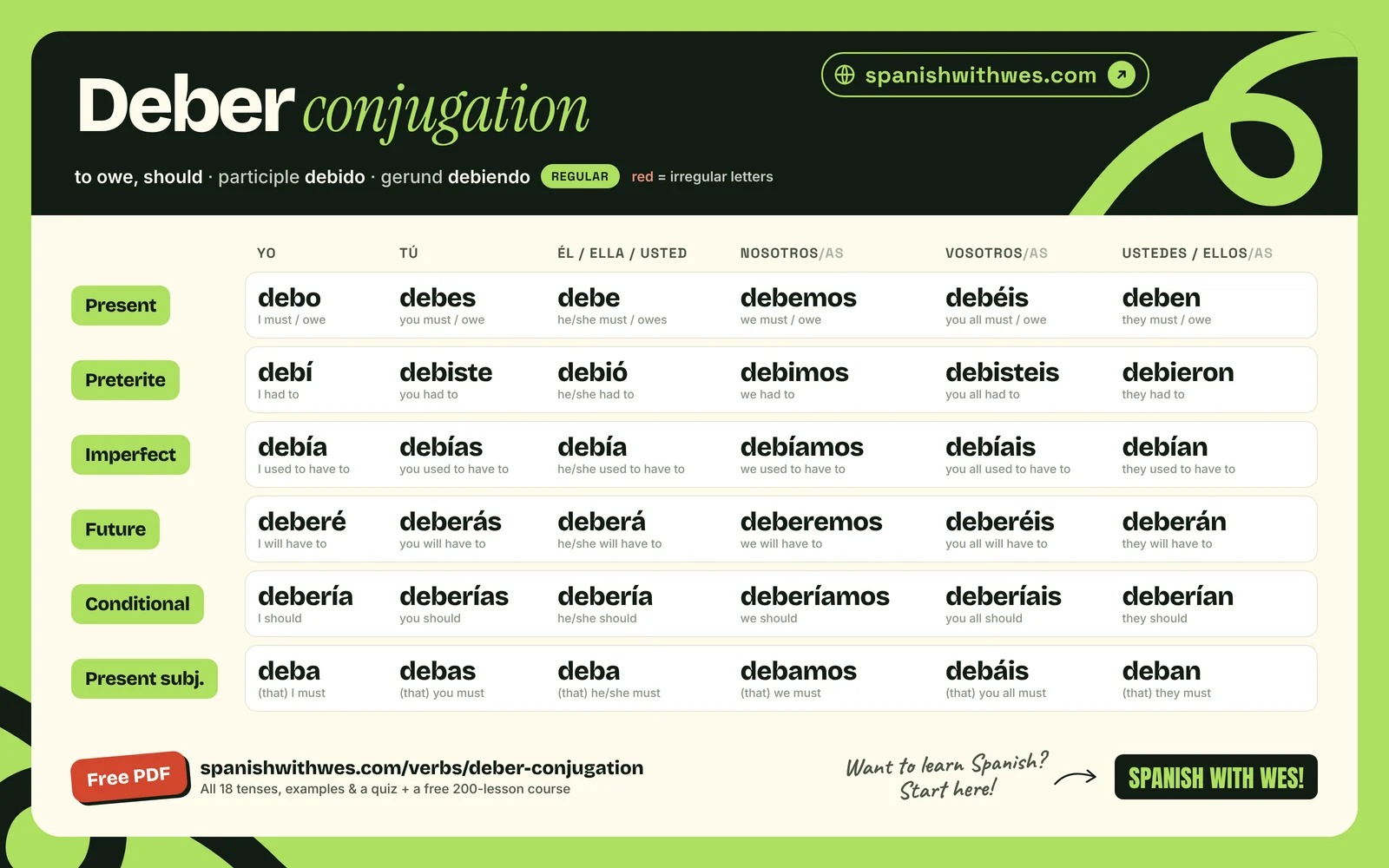
Debo, debería or tengo que?
Debo + infinitive = I must (an obligation you feel). Debería + infinitive = I should (softer, advice). Tengo que + infinitive = I have to (an outside obligation, the most common in everyday speech). And deber de + infinitive = probably: debe de estar en casa (he must be at home).
Indicative tenses of deber
Facts and things that happen: the tenses you'll use most.
Present indicative
| yo | deboI must / owe |
|---|---|
| tú | debesyou must / owe |
| él/ella/usted | debehe/she must / owes |
| nosotros/as | debemoswe must / owe |
| vosotros/as | debéisyou all must / owe |
| ellos/ellas/ustedes | debenthey must / owe |
Preterite indicative
| yo | debíI had to |
|---|---|
| tú | debisteyou had to |
| él/ella/usted | debióhe/she had to |
| nosotros/as | debimoswe had to |
| vosotros/as | debisteisyou all had to |
| ellos/ellas/ustedes | debieronthey had to |
Imperfect indicative
| yo | debíaI used to have to |
|---|---|
| tú | debíasyou used to have to |
| él/ella/usted | debíahe/she used to have to |
| nosotros/as | debíamoswe used to have to |
| vosotros/as | debíaisyou all used to have to |
| ellos/ellas/ustedes | debíanthey used to have to |
Present continuous indicative
| yo | estoy debiendoI am owing |
|---|---|
| tú | estás debiendoyou are owing |
| él/ella/usted | está debiendohe/she is owing |
| nosotros/as | estamos debiendowe are owing |
| vosotros/as | estáis debiendoyou all are owing |
| ellos/ellas/ustedes | están debiendothey are owing |
estar + gerund
Only used for owing money: me estás debiendo diez euros.
Informal future indicative
| yo | voy a deberI am going to have to |
|---|---|
| tú | vas a deberyou are going to have to |
| él/ella/usted | va a deberhe/she is going to have to |
| nosotros/as | vamos a deberwe are going to have to |
| vosotros/as | vais a deberyou all are going to have to |
| ellos/ellas/ustedes | van a deberthey are going to have to |
ir a + infinitive
Future indicative
| yo | deberéI will have to |
|---|---|
| tú | deberásyou will have to |
| él/ella/usted | deberáhe/she will have to |
| nosotros/as | deberemoswe will have to |
| vosotros/as | deberéisyou all will have to |
| ellos/ellas/ustedes | deberánthey will have to |
Conditional indicative
| yo | deberíaI should |
|---|---|
| tú | deberíasyou should |
| él/ella/usted | deberíahe/she should |
| nosotros/as | deberíamoswe should |
| vosotros/as | deberíaisyou all should |
| ellos/ellas/ustedes | deberíanthey should |
Deberías… (you should…) is the most common way to give advice.
Present perfect indicative
| yo | he debidoI have had to |
|---|---|
| tú | has debidoyou have had to |
| él/ella/usted | ha debidohe/she has had to |
| nosotros/as | hemos debidowe have had to |
| vosotros/as | habéis debidoyou all have had to |
| ellos/ellas/ustedes | han debidothey have had to |
haber (present) + past participle
Past perfect indicative
| yo | había debidoI had had to |
|---|---|
| tú | habías debidoyou had had to |
| él/ella/usted | había debidohe/she had had to |
| nosotros/as | habíamos debidowe had had to |
| vosotros/as | habíais debidoyou all had had to |
| ellos/ellas/ustedes | habían debidothey had had to |
haber (imperfect) + past participle
Future perfect indicative
| yo | habré debidoI will have had to |
|---|---|
| tú | habrás debidoyou will have had to |
| él/ella/usted | habrá debidohe/she will have had to |
| nosotros/as | habremos debidowe will have had to |
| vosotros/as | habréis debidoyou all will have had to |
| ellos/ellas/ustedes | habrán debidothey will have had to |
haber (future) + past participle
Conditional perfect indicative
| yo | habría debidoI would have had to |
|---|---|
| tú | habrías debidoyou would have had to |
| él/ella/usted | habría debidohe/she would have had to |
| nosotros/as | habríamos debidowe would have had to |
| vosotros/as | habríais debidoyou all would have had to |
| ellos/ellas/ustedes | habrían debidothey would have had to |
haber (conditional) + past participle
Subjunctive tenses of deber
Wishes, doubts, emotions and "if" sentences.
Present subjunctive
| yo | deba(that) I must |
|---|---|
| tú | debas(that) you must |
| él/ella/usted | deba(that) he/she must |
| nosotros/as | debamos(that) we must |
| vosotros/as | debáis(that) you all must |
| ellos/ellas/ustedes | deban(that) they must |
Imperfect subjunctive
| yo | debiera(if) I had to |
|---|---|
| tú | debieras(if) you had to |
| él/ella/usted | debiera(if) he/she had to |
| nosotros/as | debiéramos(if) we had to |
| vosotros/as | debierais(if) you all had to |
| ellos/ellas/ustedes | debieran(if) they had to |
Future subjunctive
| yo | debiere(if) I must |
|---|---|
| tú | debieres(if) you must |
| él/ella/usted | debiere(if) he/she must |
| nosotros/as | debiéremos(if) we must |
| vosotros/as | debiereis(if) you all must |
| ellos/ellas/ustedes | debieren(if) they must |
rarely used: legal & formal texts
Present perfect subjunctive
| yo | haya debido(that) I have had to |
|---|---|
| tú | hayas debido(that) you have had to |
| él/ella/usted | haya debido(that) he/she has had to |
| nosotros/as | hayamos debido(that) we have had to |
| vosotros/as | hayáis debido(that) you all have had to |
| ellos/ellas/ustedes | hayan debido(that) they have had to |
haber (present subj.) + past participle
Past perfect subjunctive
| yo | hubiera debido(if) I had had to |
|---|---|
| tú | hubieras debido(if) you had had to |
| él/ella/usted | hubiera debido(if) he/she had had to |
| nosotros/as | hubiéramos debido(if) we had had to |
| vosotros/as | hubierais debido(if) you all had had to |
| ellos/ellas/ustedes | hubieran debido(if) they had had to |
haber (imperfect subj.) + past participle
Future perfect subjunctive
| yo | hubiere debido(if) I will have had to |
|---|---|
| tú | hubieres debido(if) you will have had to |
| él/ella/usted | hubiere debido(if) he/she will have had to |
| nosotros/as | hubiéremos debido(if) we will have had to |
| vosotros/as | hubiereis debido(if) you all will have had to |
| ellos/ellas/ustedes | hubieren debido(if) they will have had to |
rarely used: legal & formal texts
Imperative tenses of deber
Commands and instructions.
Affirmative imperative
| tú | debeowe! |
|---|---|
| usted | debaowe! (formal) |
| nosotros/as | debamoslet's owe! |
| vosotros/as | debedowe! (you all) |
| ustedes | debanowe! (you all, formal) |
Rare: deber has no real command form.
Negative imperative
| tú | no debasdon't owe! |
|---|---|
| usted | no debadon't owe! (formal) |
| nosotros/as | no debamoslet's not owe! |
| vosotros/as | no debáisdon't owe! (you all) |
| ustedes | no debandon't owe! (you all, formal) |
Practice deber
Two quick exercises. No sign-up, no app: just you and deber.
How to use deber
Debo terminar este trabajo hoy.
I must finish this work today.
Deberías descansar más.
You should rest more.
Te debo una.
I owe you one.
Debe de ser tarde.
It must be late.
No debes fumar aquí.
You mustn't smoke here.
Example sentences with deber
- ¿Cuánto te debo?How much do I owe you?
- Debes tener cuidado.You must be careful.
- Deberíamos irnos ya.We should go now.
- Debí llamarte antes.I should have called you earlier.
- Debía mucho dinero al banco.He owed the bank a lot of money.
- Deberás practicar cada día.You'll have to practice every day.
- No deberías preocuparte tanto.You shouldn't worry so much.
- Te debo una.I owe you one.
Verbs like deber
Fully regular -er verbs like comer and beber follow the same pattern. Tener que is the everyday alternative for "have to".
Frequently asked questions about deber
Is deber regular or irregular?
Deber is completely regular. It follows the normal -er pattern in every tense.
How do you conjugate deber in the present tense?
debo, debes, debe, debemos, debéis, deben.
What is the difference between "debo" and "debería"?
Debo is "I must" (a strong obligation). Debería is "I should" (softer, advice). Use deberías to give someone advice politely.
What is the difference between "deber" and "deber de"?
Deber + infinitive = obligation (debes estudiar, you must study). Deber de + infinitive = probability (debe de estar cansado, he must be tired). In everyday speech, many people mix them up.
Deber or tener que?
Both express obligation. Tener que is more common in conversation and often comes from outside (tengo que trabajar). Deber sounds a bit more formal or moral.
What is the past participle of deber?
The past participle is debido (he debido) and the gerund is debiendo. Debido a also means "due to".
Free cheat sheet
All 18 tenses of deber, on one page.
Print it, stick it on your fridge, or keep it on your phone. Fill in your name and email and I'll send it straight to your inbox.
📩 Check your inbox! The deber cheat sheet is on its way.
Paid courses
Ready to actually speak?
Knowing the conjugations is step one. My paid courses take you from tables to real conversations: structured, step by step, with practice built in.
- Conversational courseStop freezing in real conversations
- Verb tenses courseEvery tense, finally clear

Hola, soy Wes!
Your Spanish teacher
A Dutchie who learned Spanish from scratch. I make the lessons I wish I'd had: clear, practical and free.
My story →Support Spanish with Wes!
Did this page help you?
All my lessons, verb charts and cheat sheets are free, and I want to keep it that way. If you'd like to help me make more, you can support me here. Think of it as buying me a café con leche ☕
More Spanish verbs
Verb search
Find any Spanish verb.
Type a verb, an English word or a conjugated form like fui or hubo.