No me alcanza = it's not enough
Besides "to reach" (no alcanzo el estante, I can't reach the shelf), alcanzar often means "to be enough", especially in Latin America: No me alcanza el dinero (I don't have enough money). And alcanzar a alguien = to catch up with someone: Ve tú, ahora te alcanzo.
Indicative tenses of alcanzar
Facts and things that happen: the tenses you'll use most.
Present indicative
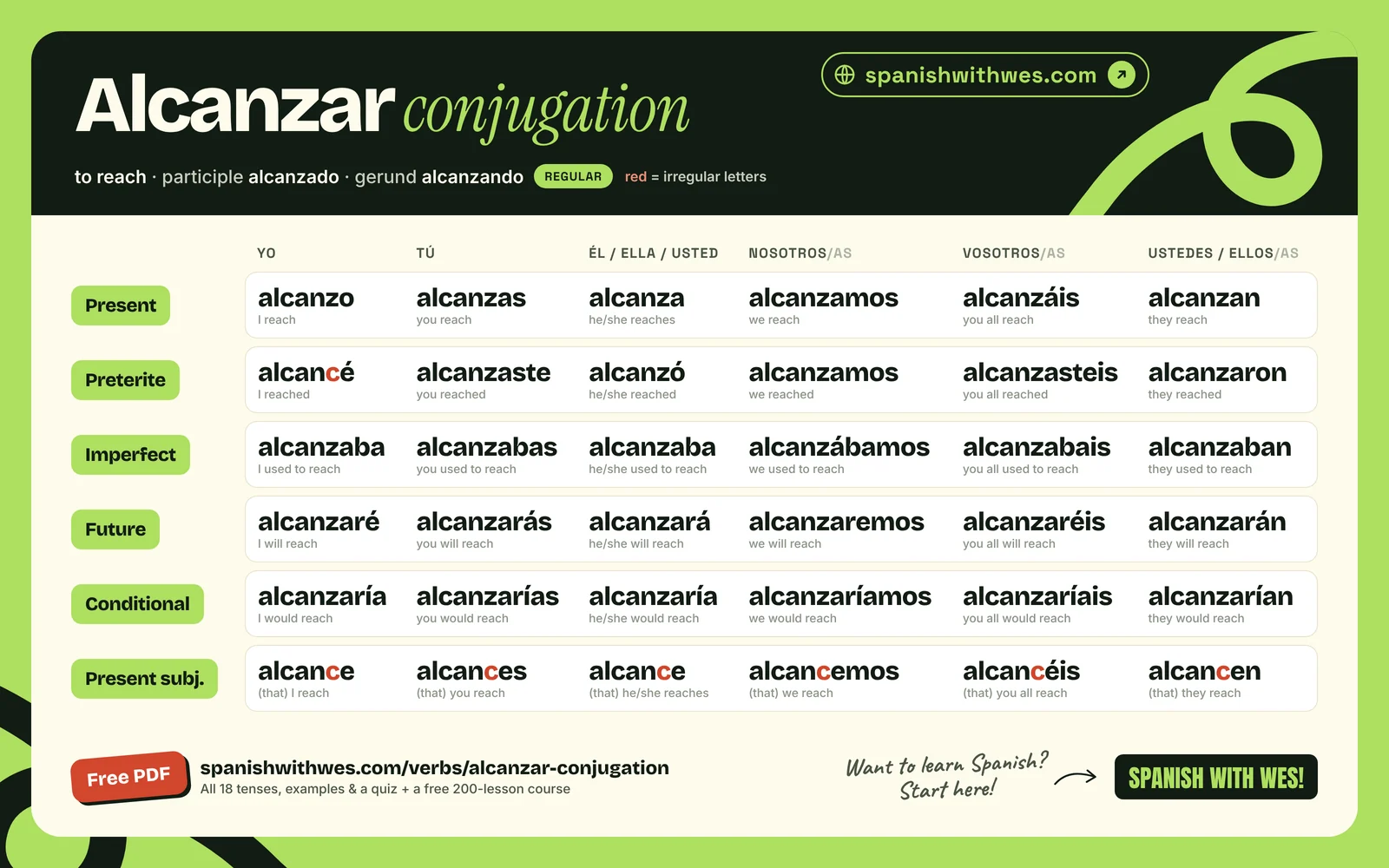
| yo | alcanzoI reach |
|---|---|
| tú | alcanzasyou reach |
| él/ella/usted | alcanzahe/she reaches |
| nosotros/as | alcanzamoswe reach |
| vosotros/as | alcanzáisyou all reach |
| ellos/ellas/ustedes | alcanzanthey reach |
Preterite indicative
| yo | alcancéI reached |
|---|---|
| tú | alcanzasteyou reached |
| él/ella/usted | alcanzóhe/she reached |
| nosotros/as | alcanzamoswe reached |
| vosotros/as | alcanzasteisyou all reached |
| ellos/ellas/ustedes | alcanzaronthey reached |
Spelling change only in the yo form: z → c before e (alcancé).
Imperfect indicative
| yo | alcanzabaI used to reach |
|---|---|
| tú | alcanzabasyou used to reach |
| él/ella/usted | alcanzabahe/she used to reach |
| nosotros/as | alcanzábamoswe used to reach |
| vosotros/as | alcanzabaisyou all used to reach |
| ellos/ellas/ustedes | alcanzabanthey used to reach |
Present continuous indicative
| yo | estoy alcanzandoI am reaching |
|---|---|
| tú | estás alcanzandoyou are reaching |
| él/ella/usted | está alcanzandohe/she is reaching |
| nosotros/as | estamos alcanzandowe are reaching |
| vosotros/as | estáis alcanzandoyou all are reaching |
| ellos/ellas/ustedes | están alcanzandothey are reaching |
estar + gerund
Informal future indicative
| yo | voy a alcanzarI am going to reach |
|---|---|
| tú | vas a alcanzaryou are going to reach |
| él/ella/usted | va a alcanzarhe/she is going to reach |
| nosotros/as | vamos a alcanzarwe are going to reach |
| vosotros/as | vais a alcanzaryou all are going to reach |
| ellos/ellas/ustedes | van a alcanzarthey are going to reach |
ir a + infinitive
Future indicative
| yo | alcanzaréI will reach |
|---|---|
| tú | alcanzarásyou will reach |
| él/ella/usted | alcanzaráhe/she will reach |
| nosotros/as | alcanzaremoswe will reach |
| vosotros/as | alcanzaréisyou all will reach |
| ellos/ellas/ustedes | alcanzaránthey will reach |
Conditional indicative
| yo | alcanzaríaI would reach |
|---|---|
| tú | alcanzaríasyou would reach |
| él/ella/usted | alcanzaríahe/she would reach |
| nosotros/as | alcanzaríamoswe would reach |
| vosotros/as | alcanzaríaisyou all would reach |
| ellos/ellas/ustedes | alcanzaríanthey would reach |
Present perfect indicative
| yo | he alcanzadoI have reached |
|---|---|
| tú | has alcanzadoyou have reached |
| él/ella/usted | ha alcanzadohe/she has reached |
| nosotros/as | hemos alcanzadowe have reached |
| vosotros/as | habéis alcanzadoyou all have reached |
| ellos/ellas/ustedes | han alcanzadothey have reached |
haber (present) + past participle
Past perfect indicative
| yo | había alcanzadoI had reached |
|---|---|
| tú | habías alcanzadoyou had reached |
| él/ella/usted | había alcanzadohe/she had reached |
| nosotros/as | habíamos alcanzadowe had reached |
| vosotros/as | habíais alcanzadoyou all had reached |
| ellos/ellas/ustedes | habían alcanzadothey had reached |
haber (imperfect) + past participle
Future perfect indicative
| yo | habré alcanzadoI will have reached |
|---|---|
| tú | habrás alcanzadoyou will have reached |
| él/ella/usted | habrá alcanzadohe/she will have reached |
| nosotros/as | habremos alcanzadowe will have reached |
| vosotros/as | habréis alcanzadoyou all will have reached |
| ellos/ellas/ustedes | habrán alcanzadothey will have reached |
haber (future) + past participle
Conditional perfect indicative
| yo | habría alcanzadoI would have reached |
|---|---|
| tú | habrías alcanzadoyou would have reached |
| él/ella/usted | habría alcanzadohe/she would have reached |
| nosotros/as | habríamos alcanzadowe would have reached |
| vosotros/as | habríais alcanzadoyou all would have reached |
| ellos/ellas/ustedes | habrían alcanzadothey would have reached |
haber (conditional) + past participle
Subjunctive tenses of alcanzar
Wishes, doubts, emotions and "if" sentences.
Present subjunctive
| yo | alcance(that) I reach |
|---|---|
| tú | alcances(that) you reach |
| él/ella/usted | alcance(that) he/she reaches |
| nosotros/as | alcancemos(that) we reach |
| vosotros/as | alcancéis(that) you all reach |
| ellos/ellas/ustedes | alcancen(that) they reach |
Same spelling change in the whole subjunctive: alcance, alcances…
Imperfect subjunctive
| yo | alcanzara(if) I reached |
|---|---|
| tú | alcanzaras(if) you reached |
| él/ella/usted | alcanzara(if) he/she reached |
| nosotros/as | alcanzáramos(if) we reached |
| vosotros/as | alcanzarais(if) you all reached |
| ellos/ellas/ustedes | alcanzaran(if) they reached |
Future subjunctive
| yo | alcanzare(if) I reach |
|---|---|
| tú | alcanzares(if) you reach |
| él/ella/usted | alcanzare(if) he/she reaches |
| nosotros/as | alcanzáremos(if) we reach |
| vosotros/as | alcanzareis(if) you all reach |
| ellos/ellas/ustedes | alcanzaren(if) they reach |
rarely used: legal & formal texts
Present perfect subjunctive
| yo | haya alcanzado(that) I have reached |
|---|---|
| tú | hayas alcanzado(that) you have reached |
| él/ella/usted | haya alcanzado(that) he/she has reached |
| nosotros/as | hayamos alcanzado(that) we have reached |
| vosotros/as | hayáis alcanzado(that) you all have reached |
| ellos/ellas/ustedes | hayan alcanzado(that) they have reached |
haber (present subj.) + past participle
Past perfect subjunctive
| yo | hubiera alcanzado(if) I had reached |
|---|---|
| tú | hubieras alcanzado(if) you had reached |
| él/ella/usted | hubiera alcanzado(if) he/she had reached |
| nosotros/as | hubiéramos alcanzado(if) we had reached |
| vosotros/as | hubierais alcanzado(if) you all had reached |
| ellos/ellas/ustedes | hubieran alcanzado(if) they had reached |
haber (imperfect subj.) + past participle
Future perfect subjunctive
| yo | hubiere alcanzado(if) I will have reached |
|---|---|
| tú | hubieres alcanzado(if) you will have reached |
| él/ella/usted | hubiere alcanzado(if) he/she will have reached |
| nosotros/as | hubiéremos alcanzado(if) we will have reached |
| vosotros/as | hubiereis alcanzado(if) you all will have reached |
| ellos/ellas/ustedes | hubieren alcanzado(if) they will have reached |
rarely used: legal & formal texts
Imperative tenses of alcanzar
Commands and instructions.
Affirmative imperative
| tú | alcanzareach! |
|---|---|
| usted | alcancereach! (formal) |
| nosotros/as | alcancemoslet's reach! |
| vosotros/as | alcanzadreach! (you all) |
| ustedes | alcancenreach! (you all, formal) |
Negative imperative
| tú | no alcancesdon't reach! |
|---|---|
| usted | no alcancedon't reach! (formal) |
| nosotros/as | no alcancemoslet's not reach! |
| vosotros/as | no alcancéisdon't reach! (you all) |
| ustedes | no alcancendon't reach! (you all, formal) |
Practice alcanzar
Two quick exercises. No sign-up, no app: just you and alcanzar.
How to use alcanzar
No alcanzo el estante de arriba.
I can't reach the top shelf.
Alcanzamos nuestro objetivo.
We reached our goal.
Ve tú, ahora te alcanzo.
You go ahead, I'll catch up with you.
No me alcanza el dinero.
I don't have enough money.
¿Me alcanzas la sal?
Can you pass me the salt?
Example sentences with alcanzar
- El niño ya alcanza la mesa.The kid can already reach the table.
- Alcancé el tren por los pelos.I caught the train by the skin of my teeth.
- El canal alcanzó un millón de suscriptores.The channel reached a million subscribers.
- Antes no alcanzaba a ver la pizarra.I couldn't manage to see the board before.
- Alcanzarás tus metas.You'll reach your goals.
- Espero que alcance para todos.I hope there's enough for everyone.
- Hemos alcanzado un acuerdo.We've reached an agreement.
- Corre, que no los alcanzamos.Run, or we won't catch up with them.
Verbs like alcanzar
All -zar verbs change z → c before e: cruzar (crucé), organizar. Empezar and comenzar do too, plus a stem change.
Frequently asked questions about alcanzar
Is alcanzar regular or irregular?
Alcanzar is regular, with a spelling change: z → c before e (alcancé, alcance).
How do you conjugate alcanzar in the present tense?
alcanzo, alcanzas, alcanza, alcanzamos, alcanzáis, alcanzan.
How do you conjugate alcanzar in the preterite?
alcancé, alcanzaste, alcanzó, alcanzamos, alcanzasteis, alcanzaron.
What does "no me alcanza" mean?
"It's not enough (for me)" — usually about money or time.
Why is it "alcancé" and not "alcanzé"?
Spanish writes ce, not ze, so the z becomes c before e.
What is the past participle of alcanzar?
The past participle is alcanzado and the gerund is alcanzando.
Free cheat sheet
All 18 tenses of alcanzar, on one page.
Print it, stick it on your fridge, or keep it on your phone. Fill in your name and email and I'll send it straight to your inbox.
📩 Check your inbox! The alcanzar cheat sheet is on its way.
Paid courses
Ready to actually speak?
Knowing the conjugations is step one. My paid courses take you from tables to real conversations: structured, step by step, with practice built in.
- Conversational courseStop freezing in real conversations
- Verb tenses courseEvery tense, finally clear

Hola, soy Wes!
Your Spanish teacher
A Dutchie who learned Spanish from scratch. I make the lessons I wish I'd had: clear, practical and free.
My story →Support Spanish with Wes!
Did this page help you?
All my lessons, verb charts and cheat sheets are free, and I want to keep it that way. If you'd like to help me make more, you can support me here. Think of it as buying me a café con leche ☕
More Spanish verbs
Verb search
Find any Spanish verb.
Type a verb, an English word or a conjugated form like fui or hubo.